
Trong xu hướng xây dựng hiện đại, giải pháp khung kèo thép nhẹ ngày càng được ứng dụng rộng rãi. Là đơn vị hơn 20 kinh nghiệm với hệ giải pháp kết cấu thép đồng bộ, SEICO mang đến hệ khung kèo thép nhẹ đạt tiêu chuẩn quốc tế, tối ưu chi phí và độ bền cho công trình. Hãy cùng SEICO tìm hiểu chi tiết về khung kèo thép nhẹ và so sánh giải pháp này với kèo thép hộp mạ kẽm ngay sau đây.
1. Khung kèo thép nhẹ là gì?
Khung kèo thép nhẹ là hệ khung thép cường độ cao (thường là G350-G450) có độ mạ kẽm cao, được thiết kế và sản xuất trên dây chuyền hiện đại đạt tiêu chuẩn quốc tế.
Hệ khung kèo thép nhẹ được liên kết bằng vít tự khoan, bu lông và bản mã để tạo thành bộ khung chịu lực cho mái.
.png "khung kèo thép nhẹ")
Khung kèo thép nhẹ là hệ khung thép cường độ cao (thường là G350-G450) có độ mạ kẽm cao
>>> Đọc thêm bài viết liên quan:
-
Nhà khung thép: Báo giá & Giải pháp thi công tối ưu
-
Nhà khung thép tiền chế là gì? Cấu tạo, ứng dụng và báo giá
2. Cấu tạo cơ bản của hệ khung kèo thép nhẹ
Hệ thống khung kèo thép nhẹ gồm 2 cấu kiện chịu lực chính:
-
Thanh TC: Đóng vai trò làm hệ kèo gánh chịu lực chính cho mái
-
Thanh TS: Đóng vai trò làm thanh lito mè để lợp ngói trực tiếp lên trên
>>> Đọc thêm bài viết liên quan:
-
Kết cấu thép nhẹ là gì? Ưu điểm & Ứng dụng
-
Kết cấu thép là gì? Phân loại và ưu điểm của kết cấu thép
3. Ưu điểm của khung kèo thép siêu nhẹ
Hệ khung kèo thép nhẹ sở hữu các ưu điểm sau:
-
Giảm tải trọng và tối ưu chi phí móng: Sử dụng thép mạ cường độ cao (G450 Z275 / G450 ZM275) giúp khung kèo có trọng lượng nhẹ nhưng khả năng chịu lực rất tốt. Tải trọng truyền xuống móng giảm đáng kể, giúp tiết kiệm chi phí nền móng.
-
Thi công nhanh: Cấu kiện được gia công sẵn tại nhà máy với độ chuẩn xác cao, lắp dựng tại công trường bằng liên kết bu-lông. Quy trình lắp dựng nhanh gọn, giúp rút ngắn tiến độ, giảm chi phí nhân công và sớm đưa công trình vào sử dụng.
-
Tối ưu chi phí vận chuyển và lắp dựng: Tối ưu chi phí thiết bị, nhân công tại công trường. Trọng lượng cấu kiện nhỏ giúp giảm nhu cầu sử dụng thiết bị cẩu tải trọng lớn, tăng tỷ lệ lấp đầy xe tải. Nhiều hạng mục có thể được lắp đặt bằng thiết bị nâng hạ cỡ nhỏ hoặc nhân công, góp phần tối ưu chi phí thi công.
-
Hạn chế hàn tại công trường: Việc sử dụng hệ liên kết bu-lông giúp hạn chế hàn trực tiếp tại công trường, giảm phụ thuộc vào thợ hàn tay nghề cao nhưng vẫn đảm bảo chất lượng.
-
Đảm bảo độ bền và tính ổn định lâu dài: Thép có khả năng chịu lực, chống uốn và chống nén tốt. Do đó, khung kèo thép nhẹ có thể chịu được điều kiện thời tiết khắc nghiệt và giữ tuổi thọ cao nếu được bảo trì đúng cách.
-
Linh hoạt và dễ mở rộng: Khung kèo thép nhẹ cho phép tạo các không gian lớn và ít vướng cột giữa, tối ưu diện tích sử dụng và rất thuận tiện cho việc cải tạo, mở rộng quy mô sau này.
.png "Ưu điểm của khung kèo thép siêu nhẹ")
Khung kèo thép siêu nhẹ giúp tối ưu chi vận chuyển và lắp dựng, đảm bảo độ bền cho công trình
4. So sánh chi tiết: Hệ kèo thép nhẹ và kèo thép hộp mạ kẽm
Bảng so sánh đối chiếu làm nổi bật ưu thế từ các đặc tính kỹ thuật:
|
Tiêu chí |
Hệ kèo thép nhẹ |
Kèo thép hộp mạ kẽm |
|---|---|---|
|
Khả năng chống ăn mòn |
Sử dụng vật liệu thép mạ kẽm dày 0,6 – 2,5mm, công trình có khả năng chống ăn mòn tốt trước các tác động như: chất thải, hơi ẩm,... trong môi trường chuồng trại chăn nuôi. |
Dễ han gỉ và ăn mòn nhanh hơn trong môi trường có độ ẩm, amoniac chuồng trại. |
|
Chi phí nền móng |
Vật liệu nhẹ, giảm thiểu chi phí làm móng. |
Trọng lượng bản thân lớn hơn, tạo tải trọng nặng lên sàn/cột khiến chi phí xử lý nền móng tăng. |
|
Vận chuyển & Lắp dựng |
Trọng lượng nhẹ giúp giảm nhu cầu sử dụng cẩu tải trọng lớn, tối ưu chi phí lắp dựng và chi phí vận chuyển do tối ưu tỷ lệ lấp đầy xe. |
Thanh thép nặng, cồng kềnh, tỷ lệ lấp đầy xe thấp, đòi hỏi thiết bị cẩu tải trọng lớn làm tăng chi phí vận chuyển và lắp dựng.. |
|
Thời gian thi công |
Cấu kiện được sản xuất sẵn tại nhà máy và lắp ghép chủ yếu bằng bu lông, giúp rút ngắn thời gian thi công tại công trường. |
Gia công trực tiếp tại hiện trường, tiến độ chậm và phụ thuộc nhiều vào tay nghề thợ hàn. |
|
Khả năng mở rộng / Cải tạo |
Thuận tiện cho việc mở rộng hoặc cải tạo công trình khi nhu cầu chuồng trại thay đổi. |
Liên kết hàn cố định khiến việc tháo dỡ, cơi nới hoặc thay đổi công năng gặp nhiều khó khăn, tốn kém chi phí cắt phá. |
Nhờ khả năng giảm tải trọng móng, chống ăn mòn vượt trội và rút ngắn thời gian thi công, giải pháp khung kèo thép nhẹ mang lại hiệu quả kinh tế rõ rệt và độ bền lâu dài cho công trình. Với năng lực gia công chuẩn xác và quy trình chuyên nghiệp, SEICO tự hào là đơn vị tin cậy mang đến các giải pháp khung kèo thép nhẹ chất lượng cao, đồng hành cùng chủ đầu tư kiến tạo những công trình tối ưu và bền vững nhất.
SEICO – Chuẩn chất thép – Trọn niềm tin
-------------------
SEICO STEEL
- Website: http://seico.vn
- Email: hnsales@seico.vn
- YouTube: www.youtube.com/@SEICOJSC
- LinkedIn: https://vn.linkedin.com/company/seicovietnamsteelstructure
Xây dựng nhà xưởng sử dụng kết cấu thép đang trở thành lựa chọn phổ biến của nhiều doanh nghiệp nhờ khả năng tối ưu chi phí đầu tư và rút ngắn đáng kể tiến độ thi công. Trong bài viết này, SEICO sẽ giúp chủ đầu tư hiểu rõ quy trình thiết kế, giải pháp kết cấu, dự toán chi phí chi tiết khi xây dựng nhà xưởng kết cấu thép cũng như những lưu ý kỹ thuật quan trọng khi triển khai dự án.
1. Các mô hình nhà xưởng công nghiệp phổ biến hiện nay
Tùy thuộc vào quy mô, ngân sách và đặc thù sản xuất, doanh nghiệp có thể lựa chọn mô hình nhà xưởng phù hợp. Hiện nay, 3 mô hình nhà xưởng công nghiệp được ứng dụng phổ biến nhất bao gồm: Nhà xưởng khung thép tiền chế, Nhà xưởng bê tông cốt thép và Nhà xưởng cao tầng.
1.1. Nhà xưởng khung thép tiền chế
Nhà xưởng khung thép tiền chế là mô hình nhà xưởng sử dụng hệ kết cấu thép được sản xuất sẵn tại nhà máy và lắp dựng tại công trường. Giải pháp này giúp rút ngắn tiến độ thi công, tối ưu chi phí đầu tư và dễ dàng mở rộng trong tương lai. Mô hình nhà xưởng tiền chế phù hợp với các nhà máy sản xuất, trung tâm logistic, kho vận và các công trình công nghiệp.
.png "xây nhà xưởng")
Nhà xưởng khung thép tiền chế được sản xuất sẵn tại nhà máy và lắp dựng tại công trường
1.2. Nhà xưởng bê tông cốt thép
Nhà xưởng bê tông cốt thép sử dụng hệ kết cấu bê tông cốt thép toàn khối hoặc lắp ghép, phù hợp với các công trình yêu cầu độ cứng, tải trọng sàn cao hoặc nhiều tầng. Loại hình này thường được lựa chọn cho các công sản xuất có yêu cầu đặc thù về kết cấu và tuổi thọ khai thác dài hạn.
1.3. Nhà xưởng cao tầng
Nhà xưởng cao tầng là mô hình nhà xưởng được thiết kế từ hai tầng trở lên nhằm tối ưu diện tích sử dụng trên quỹ đất hạn chế. Giải pháp này ngày càng phổ biến tại các khu công nghiệp có mật độ xây dựng cao, phù hợp với ngành sản xuất điện tử, công nghệ cao, kho vận tự động và trung tâm phân phối hiện đại.
.png "xây dựng nhà xưởng cao tầng")
Nhà xưởng cao tầng SEICO tối ưu diện tích sử dụng
2. Quy trình xây dựng nhà xưởng tiền chế chi tiết
Để đảm bảo công trình đạt chuẩn chất lượng, tối ưu chi phí và bàn giao đúng tiến độ, quy trình xây dựng nhà xưởng tiền chế tiêu chuẩn bao gồm 4 giai đoạn cốt lõi: Khảo sát & thiết kế, sản xuất & chuẩn bị, thi công & lắp dựng và nghiệm thu & bàn giao.
2.1. Giai đoạn 1: Khảo sát và thiết kế
Đây là giai đoạn đầu tiên trong quy trình xây dựng nhà xưởng tiền chế nhằm xác định các yêu cầu kỹ thuật, công năng sử dụng và giải pháp kết cấu phù hợp cho dự án.
-
Khảo sát hiện trạng: Thu thập thông tin về địa hình, địa chất, hạ tầng kỹ thuật và nhu cầu sử dụng của chủ đầu tư.
-
Tiếp nhận và rà soát hồ sơ kiến trúc: Tiếp nhận bản vẽ kiến trúc từ CĐT hoặc đơn vị thiết kế kiến trúc. Rà soát để đảm bảo phù hợp với giải pháp kết cấu thép tiền chế
-
Thiết kế cơ sở và thiết kế kỹ thuật: Dựa trên hồ sơ kiến trúc, xây dựng phương án kết cấu thép, hệ thống kỹ thuật và các giải pháp tối ưu về tải trọng, độ bền, chi phí.
-
Triển khai bản vẽ (shop drawing): Hoàn thiện hồ sơ bản vẽ chi tiết phục vụ sản xuất cấu kiện và thi công tại công trường.
Việc thiết kế chính xác ngay từ đầu giúp tối ưu chi phí đầu tư, hạn chế phát sinh và đảm bảo tiến độ thực hiện dự án.
>>> Đọc thêm: Thiết kế khung thép nhà công nghiệp: Quy trình và các loại khung phổ biến

SEICO sử dụng phần mềm Tekla để mô hình hóa và triển khai shop drawing, đảm bảo độ chính xác cao cho toàn bộ cấu kiện thép
2.2. Giai đoạn 2: Sản xuất kết cấu thép và chuẩn bị thi công
Sau khi hồ sơ thiết kế và shop drawing được phê duyệt, các cấu kiện thép được sản xuất đồng bộ tại nhà máy theo quy trình kiểm soát chất lượng nghiêm ngặt.
Sản xuất kết cấu thép:
-
Kiểm tra và chuẩn bị vật liệu đầu vào.
-
Cắt, gia công và tổ hợp cấu kiện.
-
Hàn cấu kiện theo quy trình kỹ thuật.
-
Kiểm tra chất lượng mối hàn và kích thước cấu kiện.
-
Phun bi xử lý bề mặt và thi công hệ sơn bảo vệ.
-
Kiểm tra chất lượng trước khi xuất xưởng.
Chuẩn bị thi công:
-
Lập phương án thi công và kế hoạch an toàn lao động.
-
Chuẩn bị mặt bằng thi công.
-
Bố trí nhân lực, máy móc và thiết bị lắp dựng.
-
Vận chuyển cấu kiện thép đến công trường.
.png "Sản xuất kết cấu thép và chuẩn bị thi công nhà xưởng")
Sản xuất kết cấu thép và chuẩn bị thi công nhà xưởng
2.3. Giai đoạn 3: Thi công và lắp dựng nhà xưởng
Giai đoạn thi công và lắp dựng nhà xưởng tập trung hoàn thiện hạ tầng móng, lắp khung kết cấu chính và hoàn thiện hệ bao che để đưa nhà xưởng vào trạng thái sẵn sàng lắp đặt thiết bị.
Thi công nền móng:
-
Đào đất và xử lý nền theo hồ sơ thiết kế.
-
Thi công hệ móng công trình.
-
Lắp đặt bu lông neo.
-
Đổ bê tông và nghiệm thu móng trước khi lắp dựng kết cấu thép.
Lắp dựng kết cấu thép:
-
Lắp dựng cột thép.
-
Lắp dựng kèo thép và dầm liên kết.
-
Lắp đặt hệ xà gồ mái, xà gồ tường và hệ giằng.
-
Căn chỉnh và siết lực các liên kết bu lông theo yêu cầu kỹ thuật.
Thi công hệ bao che:
-
Lắp đặt tôn mái hoặc panel mái.
-
Lắp đặt tôn tường hoặc panel tường.
-
Thi công cửa, máng xối, diềm mái và các phụ kiện hoàn thiện.
Thi công hệ thống kỹ thuật:
-
Hệ thống điện.
-
Hệ thống cấp thoát nước.
-
Hệ thống phòng cháy chữa cháy (PCCC).
-
Hệ thống thông gió, làm mát và các hệ thống kỹ thuật khác theo yêu cầu dự án.
Hoàn thiện công trình:
-
Thi công sân nền và hạ tầng phụ trợ.
-
Sơn hoàn thiện các hạng mục liên quan.
-
Vệ sinh công nghiệp và chuẩn bị nghiệm thu.
.png "Thi công và lắp dựng nhà xưởng")
Thi công và lắp dựng nhà xưởng gồm các bước: thi công nền móng, lắp dựng kết cấu thép, hệ bao che, hệ thống kỹ thuật và hoàn thiện công trình
2.4. Giai đoạn 4: Nghiệm thu và bàn giao
Sau khi hoàn thành thi công, công trình được kiểm tra và nghiệm thu trước khi đưa vào sử dụng.
-
Kiểm tra chất lượng toàn bộ các hạng mục.
-
Nghiệm thu kỹ thuật theo hồ sơ thiết kế.
-
Hoàn thiện hồ sơ hoàn công.
-
Bàn giao công trình cho chủ đầu tư.
.png "Nghiệm thu và bàn giao nhà xưởng")
Nghiệm thu và bàn giao nhà xưởng
3. Báo giá xây dựng nhà xưởng trọn gói
Chi phí xây dựng nhà xưởng tiền chế phụ thuộc vào quy mô, công năng sử dụng và yêu cầu kỹ thuật của từng dự án. Một số yếu tố chính ảnh hưởng đến đơn giá bao gồm:
-
Hệ kết cấu chính: Cột thép, kèo thép, dầm thép và các cấu kiện chịu lực chính.
-
Hệ kết cấu phụ: Xà gồ, giằng mái, giằng cột và các phụ kiện liên kết.
-
Hệ bao che: Tôn mái, tôn tường, panel cách nhiệt, cửa và phụ kiện hoàn thiện.
-
Chi phí gia công, vận chuyển và lắp dựng kết cấu thép.
-
Hệ sơn bảo vệ hoặc sơn chống cháy theo yêu cầu của dự án.
-
Chi phí nền móng, hạ tầng kỹ thuật và các hạng mục phụ trợ như cầu trục, sàn lửng, văn phòng hoặc hệ thống kỹ thuật chuyên dụng.
Ngoài ra, đơn giá còn phụ thuộc vào diện tích xây dựng, khẩu độ nhà xưởng, tải trọng thiết kế, chiều cao công trình và vị trí thi công.
4. Tại sao nên chọn SEICO làm đơn vị thi công lắp dựng nhà xưởng thép tiền chế?
Lắp dựng nhà xưởng thép tiền chế là giai đoạn quan trọng trong quá trình thi công, ảnh hưởng trực tiếp đến độ chính xác, tính ổn định và tuổi thọ của toàn bộ công trình. Việc kiểm soát chặt chẽ quy trình thi công, từ bước định vị bu lông móng, liên kết bu lông, mối hàn đến phương án an toàn lao động đòi hỏi nhà thầu phải có năng lực kỹ thuật vững vàng.
Thành lập từ năm 2003, với năng lực toàn diện về thiết kế, gia công và lắp dựng kết cấu thép, SEICO là đối tác uy tín được nhiều chủ đầu tư và tổng thầu tin tưởng lựa chọn nhờ những lợi thế vượt trội:
-
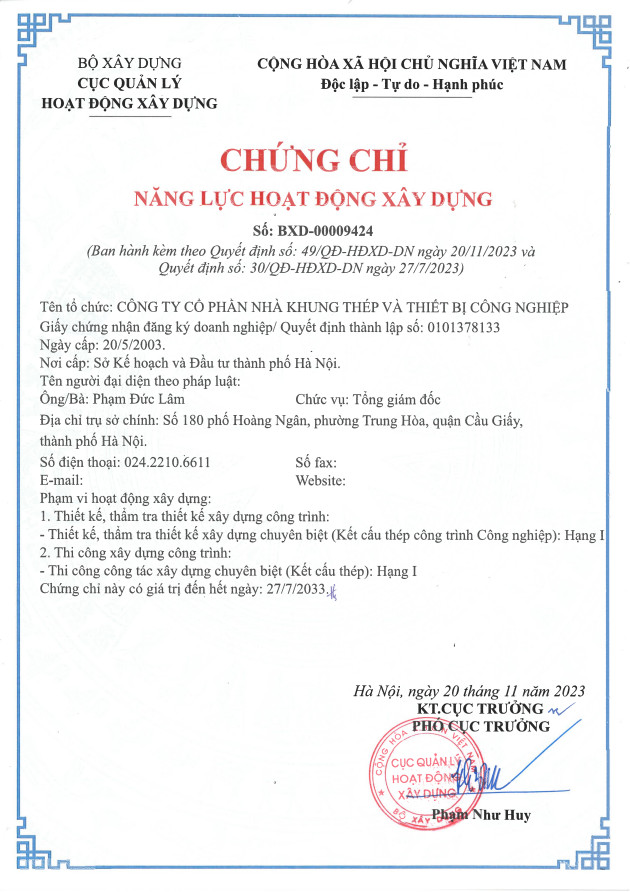
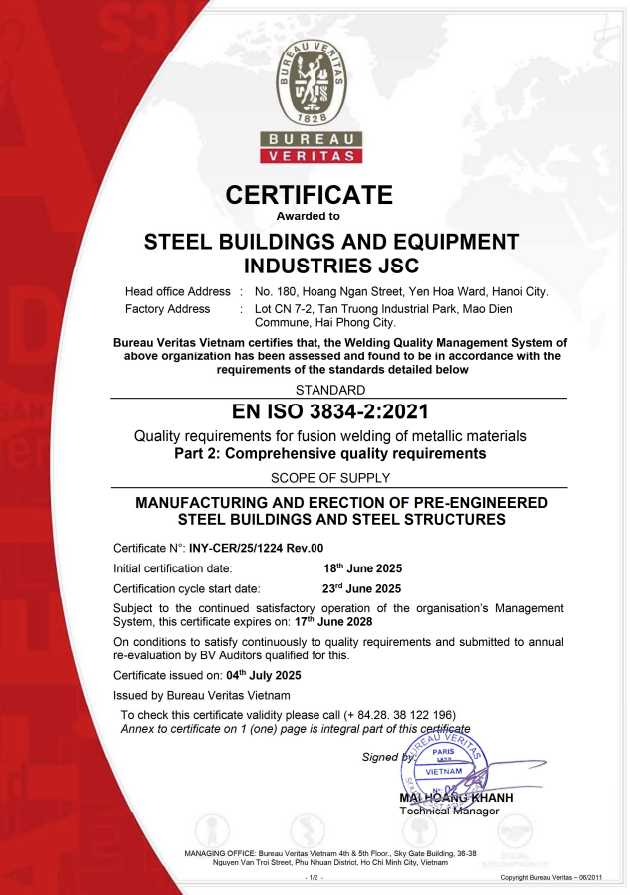
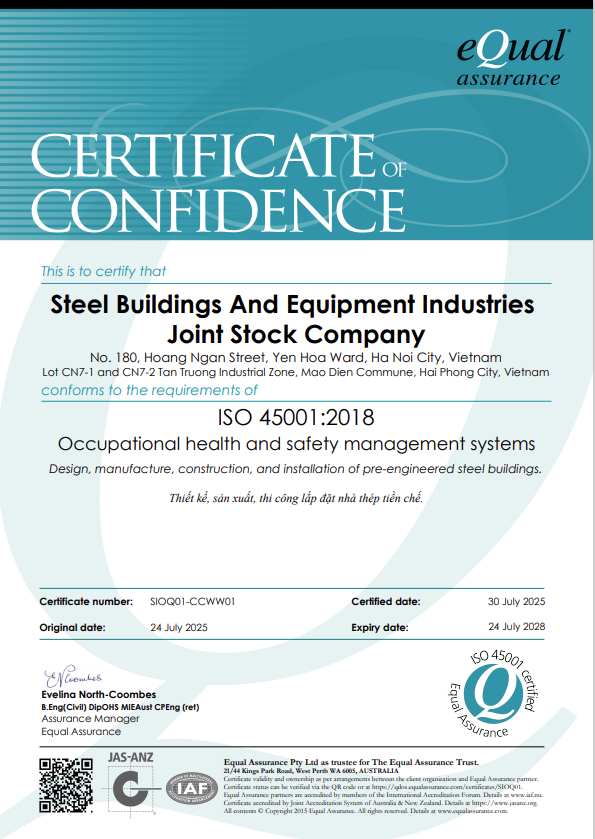
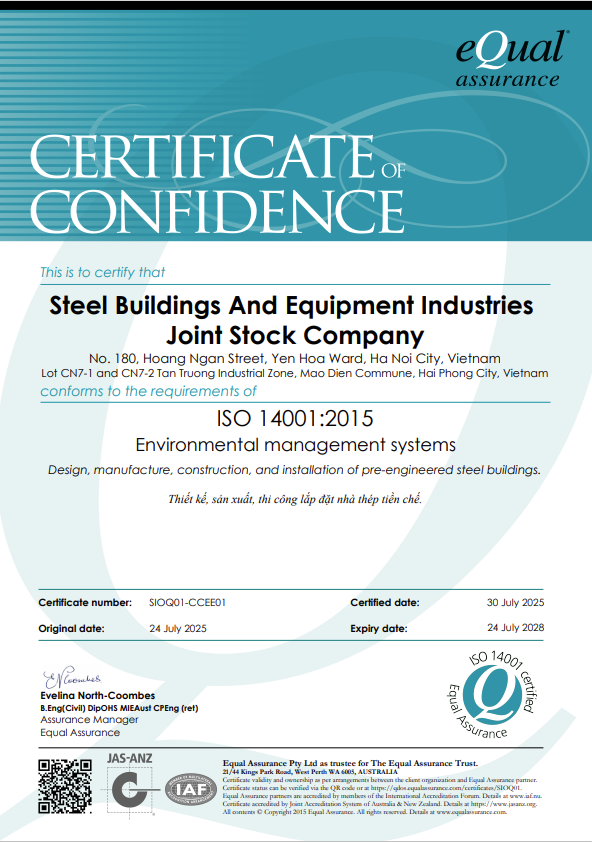
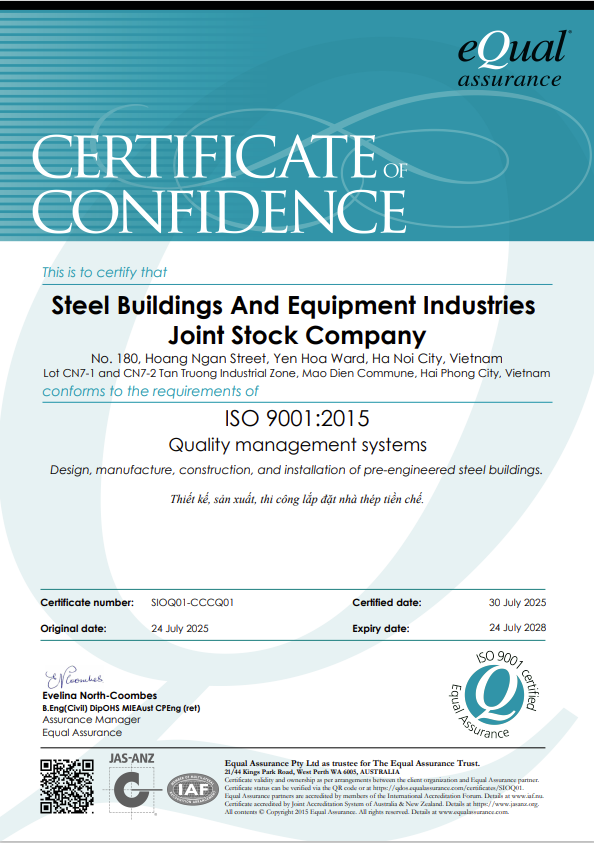
Năng lực sản xuất quy mô lớn, đáp ứng tiêu chuẩn kỹ thuật trong và ngoài nước: SEICO sở hữu 4 nhà máy hiện đại tại Hải Phòng cùng trụ sở tại Hà Nội, áp dụng hệ thống quản lý chất lượng theo tiêu chuẩn ISO 9001:2015, đảm bảo tiến độ cung ứng cho các dự án lớn. Đồng thời, SEICO cũng đạt được nhiều chứng chỉ và chứng nhận khác như:
-
ISO 14001:2015: Chứng nhận về hệ thống quản lý môi trường.
-
ISO 45001:2018: Chứng nhận về hệ thống quản lý an toàn và sức khỏe nghề nghiệp.
-
EN ISO 3834-2:2021: Chứng nhận về hệ thống quản lý chất lượng hàn.
-
Chứng chỉ EN ISO 9606-1:2017: Sát hạch tay nghề thợ hàn, được tổ chức Quốc tế Apave (Ý) chứng nhận.
-
Chứng chỉ CE Marking: Chứng chỉ chứng nhận sản phẩm tuân thủ tiêu chuẩn và quản lý chất lượng của Liên minh Châu Âu (EU).
-
-
Giải pháp tổng thể đồng bộ: SEICO mang đến một giải pháp tổng thể, đồng bộ từ: kết cấu thép - Hệ sàn (Deck/ SP Deck) - Lưới thép hàn cho đến Sơn công nghiệp. Giải pháp tổng thể này từ SEICO giúp tối ưu tổng chi phí đầu tư, đồng bộ tiêu chuẩn kỹ thuật giữa các hạng mục, rút ngắn thời gian và giảm thiểu rủi ro phát sinh trong quá trình triển khai dự án. Đặc biệt, tấm sàn SP Deck do SEICO JSC sản xuất có thể rút ngắn tối thiểu 30% tốc độ thi công so với sàn Deck thông thường.
-
Đội ngũ giàu kinh nghiệm: Đội ngũ kỹ sư và công nhân giàu kinh nghiệm của SEICO luôn cập nhật các tiêu chuẩn, công nghệ mới để đưa ra giải pháp phù hợp với từng ngành. Bên cạnh đó, mạng lưới văn phòng đại diện tại Thái Lan, Philippines, Indonesia giúp SEICO mở rộng kết nối, hỗ trợ triển khai dự án hiệu quả với các đối tác quốc tế. Đồng thời, năng lực triển khai dự án cho doanh nghiệp FDI tại Việt Nam giúp SEICO đáp ứng các yêu cầu cao về chất lượng, tiến độ và tiêu chuẩn kỹ thuật quốc tế.
-
Các dự án nổi bật của SEICO: Năng lực thực chiến của SEICO được thể hiện qua hàng loạt công trình nhà thép tiền chế quy mô trong và ngoài nước như LG Display (Hải Phòng), Hana Micron, SK Nexilis (Malaysia), Long Son Petrochemical, Core 5 Hải Phòng, Molex, Yokorei, Nitto Denko,... Danh sách dự án là minh chứng cho khả năng đáp ứng các yêu cầu kỹ thuật phức tạp trong nhiều lĩnh vực, từ hạ tầng, công nghiệp đến thương mại.
.png "SEICO làm đơn vị thi công lắp dựng nhà xưởng thép tiền chế uy tín") SEICO làm đơn vị thi công lắp dựng nhà xưởng thép tiền chế uy tín
SEICO làm đơn vị thi công lắp dựng nhà xưởng thép tiền chế uy tín
5. FAQ - Câu hỏi thường gặp về xây dựng nhà xưởng
Chi phí xây dựng nhà xưởng trọn gói hiện nay được tính như thế nào?
Chi phí xây dựng nhà xưởng trọn gói thường được tính theo công thức: Tổng chi phí = Tổng diện tích xây dựng × Đơn giá/m². Đơn giá này sẽ biến động tùy thuộc vào quy mô công trình, giải pháp kết cấu (khẩu độ, tải trọng), loại vật liệu bao che, điều kiện địa chất nền móng và các yêu cầu kỹ thuật đặc thụ khác của từng dự án.
Quy trình thiết kế nhà xưởng bao gồm những bước cơ bản nào?
Quy trình thiết kế tiêu chuẩn gồm 3 bước chính:
-
Tiếp nhận và rà soát hồ sơ kiến trúc: Tiếp nhận bản vẽ mặt bằng, mặt đứng và công năng từ chủ đầu tư hoặc đơn vị thiết kế kiến trúc.
-
Thiết kế kết cấu và kỹ thuật: Tính toán chi tiết tải trọng, thể hiện đầy đủ thông số kỹ thuật của từng cấu kiện, hệ móng, hệ khung thép và các hệ thống kỹ thuật liên quan (điện, nước, PCCC...)
-
Triển khai shop drawing & phê duyệt: Lập bản vẽ chi tiết sản xuất - lắp dựng, kiểm tra, thẩm định và phê duyệt trước khi đưa vào sản xuất.
Thời gian hoàn thành thi công một nhà xưởng tiêu chuẩn thường mất bao lâu?
Với các nhà xưởng công nghiệp quy mô phổ biến (khoảng 5.000 m2), tổng thời gian gia công cấu kiện tại nhà máy và lắp dựng hoàn thiện tại công trường thường kéo dài từ 2 đến 5 tháng. Thời gian thực tế có thể điều chỉnh tùy theo quy mô, độ phức tạp của giải pháp kết cấu, tiến độ bàn giao mặt bằng và điều kiện thời tiết.
Những sự cố kỹ thuật thường gặp nhất khi thi công nhà xưởng và cách khắc phục?
-
Lệch tim bu lông neo móng: Khắc phục bằng cách sử dụng dưỡng định vị bu lông chính xác trong quá trình đổ bê tông móng và đo đạc lại bằng máy toàn đạc trước khi lắp dựng.
-
Mất ổn định khung trong quá trình lắp dựng: Khắc phục bằng cách tuân thủ đúng trình tự thi công, bắt buộc phải triển khai hệ giằng tạm thời để cố định khung chịu lực trước khi cẩu lắp các cấu kiện tiếp theo.
-
Thấm dột tại các vị trí nối mái, vít tôn: Khắc phục bằng cách kiểm tra độ dốc mái, chọn tôn bao che chuẩn kỹ thuật, dùng keo silicone chuyên dụng và thi công đúng quy trình tại các vị trí giáp ranh, sê-nô thoát nước.
Nhà xưởng công nghiệp có tuổi thọ trung bình bao nhiêu năm?
Nếu được thiết kế đúng tiêu chuẩn kỹ thuật, gia công đạt chuẩn và tuân thủ quy trình bảo trì định kỳ, các nhà xưởng kết cấu thép tiền chế có tuổi thọ trung bình từ 30 đến 50 năm, đáp ứng tốt vòng đời vận hành và sản xuất lâu dài của doanh nghiệp.
Thời gian kiểm tra và bảo trì định kỳ cho kết cấu thép và mái tôn nhà xưởng là gì?
Chủ đầu tư nên thực hiện kiểm tra và bảo trì định kỳ 6 tháng hoặc 12 tháng/lần. Nội dung bảo trì bao gồm: kiểm tra độ chặt của hệ bu lông liên kết, đánh giá tình trạng sơn bảo vệ/chống ăn mòn của hệ kết cấu thép, dọn dẹp vệ sinh hệ thống sê-nô thoát nước mái, và xử lý kịp thời các điểm bong tróc hoặc rỉ sét cục bộ trên mái tôn.
Tóm lại, việc xây dựng nhà xưởng đạt chuẩn đòi hỏi sự chuẩn bị kỹ lưỡng từ khâu lập bản vẽ thiết kế, kiểm soát tiến độ cho đến kế hoạch bảo trì định kỳ. Hy vọng những chia sẻ trên đã giúp bạn có cái nhìn tổng quan để tối ưu chi phí và đảm bảo chất lượng cho công trình của mình. Để nhận tư vấn chuyên sâu và báo giá chi tiết, hãy liên hệ ngay với SEICO - đơn vị uy tín hàng đầu trong lĩnh vực kết cấu thép và xây dựng công nghiệp.
SEICO – Chuẩn chất thép – Trọn niềm tin
-------------------
SEICO STEEL
-
Website: http://seico.vn
-
Email: hnsales@seico.vn
-
YouTube: www.youtube.com/@SEICOJSC
-
LinkedIn: https://vn.linkedin.com/company/seicovietnamsteelstructure
Thiết kế khung thép nhà công nghiệp là bước quan trọng quyết định khả năng chịu lực, độ ổn định, tuổi thọ và hiệu quả đầu tư của công trình. Tùy theo quy mô, khẩu độ, tải trọng và mục đích sử dụng, mỗi công trình sẽ được lựa chọn giải pháp khung thép phù hợp nhằm tối ưu chi phí và đáp ứng yêu cầu vận hành. Trong bài viết này, SEICO sẽ giới thiệu quy trình thiết kế và các dạng khung thép công nghiệp phổ biến, giúp chủ đầu tư lựa chọn phương án phù hợp với nhu cầu thực tế.
1. Thiết kế khung thép nhà công nghiệp là gì?
Thiết kế khung thép nhà công nghiệp là quá trình xác định phương án kết cấu, xác định tải trọng, phân tích nội lực và lựa chọn tiết diện cấu kiện, thiết kế liên kết và kiểm tra khả năng chịu lực nhằm đảm bảo đáp ứng yêu cầu về an toàn, công năng, và hiệu quả đầu tư.
.png "Hệ kết cấu khung thép nhà công nghiệp an toàn, kinh tế")

Hệ kết cấu khung thép nhà công nghiệp an toàn, kinh tế
2. Quy trình thiết kế khung thép nhà công nghiệp
Quy trình thiết kế khung thép nhà công nghiệp cần được thực hiện theo các bước sau:
- Xác định kết cấu và sơ đồ khung: Kết cấu cơ bản gồm các khung ngang (cột, dàn mái hoặc dầm đặc, móng) liên kết với nhau bằng hệ giằng (giằng mái, giằng cột, sườn tường) và xà gồ để tạo thành khối không gian chịu lực. Sơ đồ kết cấu được lựa chọn dựa trên công năng sử dụng, khẩu độ, chiều cao và yêu cầu vận hành của công trình.
- Xác định tải trọng tác dụng: Kỹ sư thiết kế phải tính toán các loại tải trọng tác dụng lên khung bao gồm:
- Tĩnh tải: Trọng lượng bản thân mái tôn, xà gồ, trần treo, dàn, hệ giằng và kết cấu bao che.
- Hoạt tải: Tải trọng sửa chữa mái và tải trọng gió (gió đẩy, gió hút).
- Tải trọng cầu trục (nếu có): Áp lực đứng của bánh xe và lực hãm ngang khi cầu trục hoạt động.
- Tính toán nội lực và tổ hợp nội lực: Sử dụng các phương pháp cơ học kết cấu (như phương pháp chuyển vị, đồ giải Crêmona...) để tìm nội lực (mô men, lực dọc, lực cắt) tác dụng lên từng cấu kiện của khung ngang và dàn vì kèo. Sau đó, tiến hành tổ hợp các giá trị nội lực này để tìm ra trường hợp nguy hiểm nhất (chịu lực lớn nhất).
- Thiết kế và kiểm tra các cấu kiện, chi tiết:
- Cấu kiện: Lựa chọn tiết diện và kiểm tra điều kiện bền, độ võng, độ ổn định tổng thể và cục bộ cho các bộ phận như xà gồ, cột (cột đặc hoặc rỗng), và các thanh dàn chịu nén/kéo.
- Cấu tạo chi tiết: Thiết kế các liên kết bu lông cường độ cao, liên kết hàn, liên kết chân cột, bản mã và các chi tiết cấu tạo nhằm đảm bảo khả năng truyền lực, thuận lợi cho sản xuất và lắp dựng tại công trường.
>>> Bài viết liên quan: Thiết kế nhà thép tiền chế: Quy trình & tiêu chuẩn 2026
3. Các loại khung thép nhà công nghiệp phổ biến
Dưới đây là tổng hợp một số loại khung thép nhà công nghiệp được sử dụng phổ biến hiện nay.
3.1. Khung nhà không cột giữa (Clear-span)
Khung nhà không cột giữa được thiết kế để vượt nhịp lớn mà không cần cột trung gian trong không gian sử dụng. Khả năng vượt nhịp phụ thuộc vào giải pháp kết cấu, khẩu độ công trình, tải trọng thiết kế và việc tối ưu tiết diện cấu kiện.
Việc lựa chọn thiết kế khung nhà tiền chế không cột giữa mang lại hai lợi thế cốt lõi cho công trình:
- Giúp giải phóng không gian: Phục vụ hiệu quả cho nhiều mục đích sử dụng khác nhau:
- Nông nghiệp: Cung cấp diện tích rộng lớn cho các nhà chứa nông cụ, giúp dễ dàng di chuyển các loại máy móc nông nghiệp khổng lồ như máy kéo, máy gặt đập.
- Nhà kho và nhà xưởng tiền chế công nghiệp: Giúp quản lý, hàng hóa một cách nhanh chóng, hiệu quả do không bị các cột chống làm cản trở tầm nhìn hay lối đi.
- Hàng không: Đặc biệt phù hợp để làm nhà chứa máy bay vì cung cấp không gian mở lớn và dễ dàng kết hợp với các loại cửa có nhịp rộng.
- Công trình công cộng: Được sử dụng phổ biến trong các khán phòng, nhà hát, nhà thờ để đảm bảo khán giả không bị vướng tầm nhìn bởi cột thép trong suốt buổi lễ/sự kiện hoặc dùng cho các sân cưỡi ngựa trong nhà.
- Tính linh hoạt cao: Đây là ưu điểm cực lớn đối với các tòa nhà văn phòng cho thuê hay không gian bán lẻ. Do không có cột chống bên trong, người sử dụng hoặc khách thuê mới có thể tự do thay đổi mặt bằng, thêm hoặc gỡ bỏ các vách ngăn nội thất để phù hợp với nhu cầu sử dụng thay đổi qua các năm mà không cần lo lắng về việc phá vỡ kết cấu chịu lực của tòa nhà.
3.2. Khung nhà có cột giữa (Multi-Span)
Khác với khung không có cột giữa, khung nhà có cột giữa (Multi-span) là loại hệ khung nhà thép bố trí một số lượng giới hạn các cột chống bên trong không gian công trình để hỗ trợ kết cấu chịu tải cho mái.
Việc lựa chọn thiết kế khung có cột giữa mang lại những lợi ích cốt lõi sau:
- Tối ưu chi phí cho các công trình cực lớn: Đối với các công trình công nghiệp có nhịp lớn (ví dụ: nhà thép tiền chế công nghiệp), nếu không sử dụng cột giữa, các cột và vì kèo sẽ cần phải được thiết kế to và nặng, kéo theo lượng thép và chi phí đầu tư tăng. Do đó, việc bố trí một số cột bên trong sẽ giúp giảm nhịp tính toán và nội lực trong cấu kiện, từ đó hạn chế lượng thép cần sử dụng và tối ưu chi phí xây dựng.
- Phù hợp với các công trình có không gian lớn, cần phân chia thành các khu vực nhỏ: Giải pháp khung Multi-span thường được lựa chọn để xây dựng nhà xưởng có quy mô lớn, nhà kho có diện tích rất lớn, nhà máy, trung tâm thương mại và các đại siêu thị.
.png "Khung thép nhà công nghiệp Multi-span")

Khung Multi-span (Nguồn ảnh: Sưu tầm)
3.3. Khung nhà một mái (Single Slope)
Khung nhà một mái (single slope) là một hệ thống khung thép tiền chế đơn giản và tiết kiệm, được sử dụng phổ biến cho các công trình xây mới cũng như các hạng mục cơi nới, mở rộng từ một cấu trúc đã có sẵn
Những đặc điểm và ứng dụng nổi bật của hệ khung một mái này bao gồm:
- Đặc điểm nổi bật:
- Khung single slope có thể sử dụng cột thẳng để tối đa hóa diện tích sử dụng bên trong đối với các công trình có nhịp nhỏ hoặc sử dụng cột vát (tapered column) như một giải pháp tiết kiệm chi phí hơn cho các không gian có nhịp rộng hơn.
- Hình dáng thiết kế mái chỉ dốc về một hướng duy nhất, tập trung toàn bộ nước về một phía [g].
- Ứng dụng nổi bật:
- Loại khung này thường rất phù hợp để xây thêm các phần bổ sung (như thêm gian nhà/cánh nhà) cho công trình cũ. VD: làm văn phòng cho các nhà kho lớn, nhà máy sản xuất hoặc cơ sở bảo dưỡng xe.
- Ngoài ra, đây cũng là loại khung lý tưởng để xây dựng các trạm cứu hỏa, cửa hàng tiện lợi, khu phức hợp văn phòng, khu trung tâm thương mại bán lẻ, hoặc nhà kho, nhà xưởng nhỏ, nhà để xe, công trình phụ trợ trong nhà máy.
.png "Khung thép nhà công nghiệp single slope")

Khung single slope
3.4. Khung Multi-Gable
Khung Multi-Gable là một dạng kết cấu thép với phần mái có thiết kế gồm nhiều đỉnh mái chóp (gable). Hệ khung này kết hợp giữa các mái chóp và các cột hỗ trợ bên dưới để phân chia không gian nhà công nghiệp thành các khu vực chức năng khác nhau.
Dưới đây là các đặc điểm và ứng dụng nổi bật của loại khung Multi-Gable:
- Đặc điểm nổi bật:
- Mái chóp được chia thành nhiều phần, giúp tăng cường khả năng chịu tải cho công trình.
- Thiết kế có tính thẩm mỹ cao, tạo ra không gian mở rộng và hấp dẫn.
- Khả năng thoát nước mưa tốt nhờ vào mái có nhiều đỉnh, giảm thiểu nguy cơ đọng nước trên mái.
- Ứng dụng nổi bật:
- Nhà xưởng công nghiệp quy mô lớn: Khung Multi-Gable rất phù hợp cho các nhà xưởng có diện tích lớn cần không gian thoáng đãng, không bị vướng bởi các cột lớn làm cản trở việc di chuyển, vận hành bên trong.
- Các công trình đòi hỏi thẩm mỹ: Khung Multi-Gable cũng được ứng dụng rộng rãi tại cho công trình cần tính thẩm mỹ cao như trung tâm hội nghị, nhà thi đấu thể thao hoặc các sân vận động.
.png "Khung Multi-Gable")
Khung Multi-Gable
3.5. Khung Curve Frame
Khung Curve Frame là loại khung thép có thiết kế mái cong, tạo ra hình dạng uốn lượn đặc trưng thay vì mái phẳng hoặc mái dốc như các loại khung thông thường khác
Dưới đây là các đặc điểm và ứng dụng thực tế của loại khung Curve Frame:
- Đặc điểm:
- Thiết kế mái cong giúp làm giảm sức ép và cải thiện đáng kể khả năng chịu tải, từ đó giảm bớt tải trọng cho toàn bộ kết cấu công trình.
- Thiết kế mang lại tính thẩm mỹ, tạo nên một không gian kiến trúc ấn tượng và khác biệt.
- Hệ khung này cực kỳ phù hợp cho các công trình đòi hỏi tính thẩm mỹ cao hoặc xây dựng tại những khu vực thường xuyên chịu ảnh hưởng bởi điều kiện thời tiết khắc nghiệt.
- Ứng dụng thực tế:
- Nhà xưởng, kho bãi yêu cầu thẩm mỹ: Các chủ đầu tư chú trọng vào hình thức của công trình thường chọn khung Curve Frame để tạo ra không gian nổi bật và đặc biệt.
- Showroom, trung tâm triển lãm: Đối với các không gian trưng bày cần sự thu hút thị giác cao nhằm nâng cao tính hấp dẫn đối với khách tham quan như showroom, trung tâm triển lãm thì khung Curve Frame là một lựa chọn lý tưởng
.png "thiết kế khung nhà một nhịp không cột giữa với mái vòm")

Khung nhà một nhịp không cột giữa với mái vòm
Thiết kế khung thép cần dựa trên khẩu độ, tải trọng, công năng sử dụng và yêu cầu đầu tư của từng công trình. Khung Clear Span phù hợp với không gian không có cột giữa, Multi-Span tối ưu cho công trình có mặt bằng lớn, trong khi Single Slope, Multi-Gable và Curve Frame đáp ứng các yêu cầu đặc thù về kiến trúc và vận hành. Với hơn 23 năm kinh nghiệm trong lĩnh vực kết cấu thép và nhà thép tiền chế, SEICO cung cấp giải pháp tổng thể từ thiết kế, gia công đến lắp dựng, giúp chủ đầu tư triển khai công trình chất lượng, đáp ứng yêu cầu kỹ thuật và hiệu quả khai thác lâu dài.”
SEICO – Chuẩn chất thép – Trọn niềm tin
-------------------
SEICO STEEL
- Website: http://seico.vn
- Email: hnsales@seico.vn
- YouTube: www.youtube.com/@SEICOJSC
- LinkedIn: https://vn.linkedin.com/company/seicovietnamsteelstructure
Thiết kế nhà thép tiền chế là bước quan trọng trong quá trình triển khai công trình, nhằm xác định phương án kiến trúc, giải pháp kết cấu, tải trọng thiết kế, cấu kiện và các liên kết phù hợp với yêu cầu sử dụng. Trong bài viết này, SEICO sẽ giới thiệu quy trình thiết kế nhà thép tiền chế, các yêu cầu kỹ thuật, tiêu chuẩn áp dụng và những yếu tố cần lưu ý khi lựa chọn phương án phù hợp cho từng dự án.
1. Quy trình thiết kế nhà thép tiền chế
Giai đoạn thiết kế là bước khởi đầu trong quy trình 3 giai đoạn của nhà thép tiền chế (Thiết kế, gia công/sản xuất cấu kiện và lắp dựng)
1.1. Thiết kế bản vẽ kiến trúc nhà khung thép tiền chế
Thiết kế bản vẽ kiến trúc là bước xác định công năng, quy mô, hình dạng, kích thước không gian, cao độ và các yêu cầu về sử dụng, thẩm mỹ của công trình. Đối với nhà khung thép, phương án kiến trúc cần phối hợp với giải pháp kết cấu và các hệ thống kỹ thuật như điện, cấp thoát nước, thông gió, điều hòa, phòng cháy chữa cháy nhằm đảm bảo tính đồng bộ khi triển khai.
Bản vẽ kiến trúc sẽ thể hiện chi tiết các yếu tố như:
- Mặt bằng
- Mặt đứng
- Mặt cắt bản vẽ phối cảnh
- Các chi tiết khác (cầu thang, nhà vệ sinh, lát sàn, cửa,..)
1.2. Tính toán kết cấu thép
Sau khi xác định phương án kiến trúc và sơ đồ kết cấu, kỹ sư mô hình hóa và phân tích hệ kết cấu bằng phần mềm chuyên dụng như SAP2000, ETABS hoặc phần mềm tương đương để xác định nội lực, lựa chọn tiết diện cấu kiện và thiết kế liên kết phù hợp.
Việc tính toán nội lực sẽ bao gồm các thông số:
- Tĩnh tải, gồm trọng lượng bản thân kết cấu và các tải trọng thường xuyên như mái, tường, trần, sàn hoàn thiện, hệ thống kỹ thuật,…
- Hoạt tải sử dụng
- Tải cầu trục và tải trọng gió
.png "Tính toán kết cấu thép đảm bảo an toàn và chịu lực")
Tính toán kết cấu thép đảm bảo an toàn và chịu lực
1.3. Thiết kế bản vẽ kỹ thuật
Hồ sơ thiết kế kỹ thuật thể hiện giải pháp kết cấu, kích thước cấu kiện, vật liệu, liên kết và các yêu cầu kỹ thuật chủ yếu. Đây là cơ sở để phối hợp giữa các bộ môn thiết kế và triển khai hồ sơ bản vẽ thi công, bản vẽ sản xuất và biện pháp lắp dựng.
1.4. Thiết kế bản vẽ sản xuất
Từ hồ sơ thiết kế được phê duyệt, đội ngũ kỹ sư triển khai chi tiết lập bản vẽ sản xuất và lắp dựng bằng Tekla Structures hoặc các phần mềm BIM/detailing chuyên dụng. Hồ sơ thể hiện chi tiết từng cấu kiện, liên kết, bản mã, bu lông, mối hàn và bảng thống kê vật tư phục vụ gia công, kiểm soát chất lượng và lắp dựng.
2. Các yêu cầu tối thiểu khi thiết kế nhà khung thép
Thiết kế nhà thép tiền chế cần đáp ứng đồng thời các yêu cầu về công năng, độ an toàn, hiệu quả sử dụng vật liệu và khả năng thi công thực tế. Việc tuân thủ các tiêu chí này giúp công trình vận hành ổn định, tối ưu chi phí đầu tư và thuận lợi trong suốt vòng đời khai thác và sử dụng.
2.1. Đảm bảo phương án kiến trúc và tính thẩm mỹ
Thiết kế cần đáp ứng yêu cầu công năng sử dụng, quy hoạch tổng mặt bằng, dây chuyền sản xuất và các tiêu chí kiến trúc của công trình. Đồng thời, phương án kiến trúc cần đảm bảo tính thẩm mỹ, khả năng mở rộng và hiệu quả khai thác lâu dài.
2.2. Đảm bảo khả năng chịu lực và độ an toàn
Khi thiết kế nhà thép tiền chế, các kiến trúc sư và kỹ sư phải:
- Tính toán chi tiết tất cả các loại tải trọng tác động lên công trình (tải trọng bản thân, tải trọng vật liệu hoàn thiện, hoạt tải sử dụng, tải gió, hệ thống kỹ thuật,...).
- Đưa ra thiết kế móng, khung, sàn đảm bảo khả năng chịu lực và độ võng trong phạm vi cho phép.
- Tính toán chi tiết cho từng cấu kiện như: tiết diện cột, dầm, sàn và các liên kết hàn, bu lông cường độ cao.
- Tính toán dự phòng cho cả phương án nâng tầng hoặc mở rộng diện tích trong tương lai nếu chủ đầu tư yêu cầu.
.png "Khi thiết kế nhà thép tiền chế, cần tính toán chính xác tất cả tải trọng tác động lên công trình")
Khi thiết kế nhà thép tiền chế, cần tính toán chính xác tất cả tải trọng tác động lên công trình
2.3. Tối ưu vật liệu
Bản thiết kế phải hướng tới việc sử dụng vật tư, vật liệu ở mức hợp lý và tối ưu, đồng thời vẫn cần đảm bảo tuyệt đối các tiêu chuẩn kỹ thuật cho nhà tiền chế thép.
2.4. Tối ưu biện pháp vận chuyển và lắp dựng
Thiết kế cần xem xét đến điều kiện vận chuyển, năng lực thiết bị nâng hạ và biện pháp lắp dựng nhà thép tiền chế tại công trường. Do đó, kích thước, trọng lượng cấu kiện và phương án liên kết cần được tối ưu để thuận lợi cho quá trình sản xuất, vận chuyển và thi công, đảm bảo an toàn và tiến độ.
>>> Bài viết liên quan: Báo giá nhà thép tiền chế: Cập nhật chi phí thi công
3. Các tiêu chuẩn thiết kế kết cấu nhà thép tiền chế phổ biến
Thiết kế kết cấu nhà thép tiền chế cần tuân thủ các bộ tiêu chuẩn kỹ thuật phù hợp để đảm bảo an toàn, độ bền và tính đồng bộ trong quá trình thiết kế, sản xuất và thi công.
3.1. Tiêu chuẩn Việt Nam
Trong quá trình thiết kế và tính toán kết cấu thép, việc tuân thủ các tiêu chuẩn Việt Nam là yêu cầu quan trọng nhằm đảm bảo công trình đáp ứng đúng quy định kỹ thuật. Dưới đây là những TCVN phổ biến:
- TCVN 5575:2012 & phiên bản mới nhất TCVN 5575:2024: Tiêu chuẩn quốc gia quy định chi tiết về thiết kế, tính toán kết cấu thép trong xây dựng công trình dân dụng và công nghiệp.
- TCVN 2737:2023 - Tải trọng và tác động: Quy định các loại tải trọng tác dụng lên công trình như tĩnh tải, hoạt tải, tải trọng gió, tải trọng cầu trục, tải trọng nhiệt,... Đây là tiêu chuẩn nền tảng được sử dụng cùng với TCVN 5575 khi thiết kế kết cấu thép.
3.2. Tiêu chuẩn Mỹ
Hệ thống tiêu chuẩn Mỹ là một trong những hệ quy chuẩn khắt khe và được ứng dụng trên toàn cầu cho các dự án có quy mô lớn hoặc vốn đầu tư nước ngoài, đặc biệt là với các thiết kế nhà thép công nghiệp .
- AISC 360 (Specification for Structural Steel Buildings): Tiêu chuẩn thiết kế kết cấu thép phổ biến nhất của Viện Thép Hoa Kỳ, áp dụng phương pháp thiết kế hệ số tải trọng và sức kháng (LRFD) hoặc phương pháp ứng suất cho phép (ASD). Phiên bản mới nhất là AISC 360-22.
- ASTM: Tiêu chuẩn ASTM định rõ các phương pháp kiểm tra, thông số kỹ thuật và quy định sử dụng trong việc sản xuất và kiểm tra chất lượng sản phẩm thép
.png "Một số tiêu chuẩn ASTM phổ biến trong thiết kế và thi công nhà thép tiền chế")
Một số tiêu chuẩn ASTM phổ biến trong thiết kế và thi công nhà thép tiền chế
3.3. Tiêu chuẩn Châu Âu
Eurocode 3 (EN 1993) là bộ tiêu chuẩn thiết kế kết cấu thép của Liên minh Châu Âu, bao gồm nhiều phần quy định về thiết kế tổng quát, liên kết, ổn định, kết cấu chịu tải trọng động, cầu thép và các ứng dụng chuyên biệt khác.
3.4. Tiêu chuẩn Nhật Bản
JIS (Japanese Industrial Standards) là hệ thống tiêu chuẩn quy định yêu cầu đối với vật liệu thép, bu lông, mối hàn và các sản phẩm công nghiệp của Nhật. Trong các dự án có vốn đầu tư Nhật Bản, JIS thường được sử dụng kết hợp với các quy chuẩn thiết kế và yêu cầu kỹ thuật của chủ đầu tư.
.png "Một số tiêu chuẩn JIS phổ biến trong thiết kế nhà thép tiền chế")
Một số tiêu chuẩn JIS phổ biến
4. Giải pháp nhà thép tiền chế đồng bộ từ SEICO: Tối ưu công năng, bền vững công trình
Thành lập năm 2003, SEICO là đơn vị thiết kế, chế tạo và thi công kết cấu thép – nhà thép tiền chế với hơn 20 năm hoạt động. SEICO đã tham gia triển khai các dự án công nghiệp, logistics, kho vận quy mô lớn, trung tâm thương mại, tổ hợp vui chơi giải trí, siêu thị, bệnh viện, trường học và các dự án hạ tầng giao thông cho cả chủ đầu tư trong nước lẫn doanh nghiệp FDI. Năng lực này của SEICO được xây dựng trên bốn nền tảng:
-
Năng lực sản xuất quy mô lớn, đáp ứng tiêu chuẩn kỹ thuật trong và ngoài nước: SEICO sở hữu 4 nhà máy hiện đại tại Hải Phòng cùng trụ sở tại Hà Nội, áp dụng hệ thống quản lý chất lượng theo tiêu chuẩn ISO 9001:2015, đảm bảo tiến độ cung ứng cho các dự án lớn. Bên cạnh đó, SEICO còn đạt được nhiều chứng chỉ và chứng nhận khác như:
-
ISO 14001:2015: Chứng nhận về hệ thống quản lý môi trường.
-
ISO 45001:2018: Chứng nhận về hệ thống quản lý an toàn và sức khỏe nghề nghiệp.
-
EN ISO 3834-2:2021: Chứng nhận về hệ thống quản lý chất lượng hàn.
-
Chứng chỉ EN ISO 9606-1:2017: Sát hạch tay nghề thợ hàn, được tổ chức Quốc tế Apave (Ý) chứng nhận.
-
Chứng chỉ CE Marking: Chứng chỉ chứng nhận sản phẩm tuân thủ tiêu chuẩn và quản lý chất lượng của Liên minh Châu Âu (EU).
-
SEICO áp dụng 2 tiêu chuẩn Mỹ trong quá trình thiết kế kết cấu thép: ANSI/AISC - LRFD 93 Specification for structural steel building và AISC S329-85 Allowable stress design. Do đó, thiết kế của SEICO luôn đáp ứng được yêu cầu khắt khe của từng loại hình dự án.
-
- Giải pháp tổng thể đồng bộ: Thay vì bán lẻ từng sản phẩm phần, SEICO cung cấp giải pháp đồng bộ và tổng thể từ kết cấu thép, sàn thép, tôn lợp đến sơn công nghiệp. Nhờ đó, mỗi dự án của SEICO đều được tối ưu chi phí đầu tư tổng thể, đảm bảo sự đồng bộ về tiêu chuẩn kỹ thuật, rút ngắn thời gian thực hiện và giảm thiểu rủi ro phát sinh trong quá trình thực thi. Đặc biệt, tấm sàn SP Deck do SEICO JSC sản xuất giúp tăng tối thiểu 30% tốc độ thi công so với giải pháp sàn Deck thông thường.
- Đội ngũ giàu kinh nghiệm: Đội ngũ kỹ sư và công nhân giàu kinh nghiệm, tận tâm của SEICO luôn không ngừng cập nhật các tiêu chuẩn và công nghệ mới để đưa ra các giải pháp tối ưu cho khách hàng theo đặc thù riêng của từng ngành (điện tự, năng lượng, logistics…). Ngoài ra, SEICO cũng có mạng lưới chi nhánh hoạt động tại nhiều quốc gia Đông Nam Á như Thái Lan, Philippines, Indonesia - giúp phối hợp và triển khai dự án hiệu quả với các đối tác quốc tế. Bên cạnh đó, với năng lực triển khai nhiều dự án cho doanh nghiệp FDI tại Việt Nam, SEICO có khả năng đáp ứng các yêu cầu cao về chất lượng, tiến độ và tiêu chuẩn kỹ thuật quốc tế.
- Kinh nghiệm từ nhiều dự án lớn trong đa dạng ngành nghề: SEICO đã tham gia triển khai nhiều công trình nhà khung thép tiêu biểu như Dệt may Thái Tuấn, Metro Line Bến Thành, Hạ Long EPC, Nhà máy CFG, Taisan Dung Quất,... góp phần khẳng định năng lực và chuyên môn trong thiết kế, thi công nhà thép tiền chế ở đa dạng các lĩnh vực với các yêu cầu kỹ thuật khác nhau.
.png "SEICO cung cấp giải pháp kết cấu thép tổng thể, bền vững")
SEICO cung cấp giải pháp kết cấu thép tổng thể, bền vững
5. Các câu hỏi thường gặp về thiết kế nhà thép tiền chế
Quy trình thiết kế nhà thép tiền chế gồm bao nhiêu bước?
Quy trình thiết kế nhà thép tiền chế thường gồm 4 bước chính:
- Thiết kế bản vẽ kiến trúc
- Tính toán kết cấu thép
- Thiết kế bản vẽ kỹ thuật
- Thiết kế bản vẽ sản xuất
Các tiêu chuẩn thiết kế kết cấu nhà thép phổ biến hiện nay là gì?
Các dự án nhà thép tiền chế hiện nay tại Việt Nam thường áp dụng TCVN 5575 kết hợp TCVN. Bên cạnh đó, SEICO còn sử dụng các tiêu chuẩn của Mỹ (ANSI/AISC - LRFD 93 Specification for structural steel building và AISC S329-85 Allowable stress design) trong quá trình thiết kế các dự án kết cấu nhà thép tiền chế có chủ đầu tư Việt Nam.
Bản vẽ kiến trúc nhà thép tiền chế ban đầu thể hiện những nội dung nào?
Bản vẽ kiến trúc giúp chủ đầu tư hình dung tổng thể công trình trước khi thi công. Bản vẽ thường thể hiện mặt bằng, mặt đứng, mặt cắt bản vẽ phối cảnh cùng các chi tiết như cửa, cầu thang, sàn, khu vệ sinh và hệ thống kỹ thuật, từ đó làm cơ sở để triển khai các bước thiết kế tiếp theo.
Nếu cần nâng tầng hoặc mở rộng công trình trong tương lai thì xử lý như thế nào?
Nếu chủ đầu tư có kế hoạch mở rộng hoặc nâng tầng, đơn vị thiết kế sẽ xem xét ngay từ giai đoạn tính toán kết cấu. Kỹ sư sẽ đánh giá khả năng chịu lực của móng, cột, dầm và các liên kết để xây dựng phương án dự phòng phù hợp, giúp việc cải tạo sau này thuận lợi hơn mà vẫn đảm bảo an toàn cho công trình.
Một phương án thiết kế nhà thép tiền chế hiệu quả không chỉ nằm ở khả năng chịu lực mà còn cần cân bằng giữa công năng, vật liệu, tiến độ và định hướng phát triển lâu dài. Việc lựa chọn tiêu chuẩn phù hợp, kiểm soát hồ sơ kỹ thuật và dự tính khả năng mở rộng ngay từ đầu giúp công trình vận hành ổn định hơn. SEICO, với hơn 20 năm trong lĩnh vực nhà thép tiền chế, đem đến giải pháp tổng thể, đồng bộ, có thể đáp ứng các yêu cầu đa dạng của công trình công nghiệp hiện đại.
SEICO – Chuẩn chất thép – Trọn niềm tin
-------------------
SEICO STEEL
- Website: http://seico.vn
- Email: hnsales@seico.vn
- YouTube: www.youtube.com/@SEICOJSC
- LinkedIn: https://vn.linkedin.com/company/seicovietnamsteelstructure
Nhà thép tiền chế đang trở thành lựa chọn tối ưu cho nhiều công trình, Nhờ tối ưu tiến độ thi công và chi phí đầu tư, tính linh hoạt và khả năng đáp ứng cao . Trong bài viết này, SEICO sẽ giúp chủ đầu tư hiểu rõ cấu tạo, ưu điểm, phân loại, quy trình xây dựng, các yếu tố ảnh hưởng đến báo giá cũng như những lưu ý quan trọng để lựa chọn giải pháp phù hợp cho từng dự án.
1. Nhà thép tiền chế là gì?
Nhà thép tiền chế (tiếng Anh: Pre-Engineered Building - PEB), hay còn gọi là nhà khung thép tiền chế, là loại công trình được xây dựng từ các cấu kiện thép (cột, dầm, xà gồ, kèo/dầm, xà gồ, hệ giằng,...) kết hợp với hệ mái và tường bao che để tạo thành công trình hoàn chỉnh. Các cấu kiện này được sản xuất và gia công tại nhà máy theo bản vẽ kỹ thuật, sau đó vận chuyển đến công trường để lắp dựng hoàn chỉnh.
.png "Nhà thép tiền chế cho phép tạo không gian khẩu độ lớn với ít cột trung gian")
Nhà thép tiền chế cho phép tạo không gian khẩu độ lớn với ít cột trung gian.
2. Ưu điểm và hạn chế của nhà thép tiền chế
Nhà thép tiền chế được đánh giá cao nhờ khả năng thi công nhanh, linh hoạt trong thiết kế và tối ưu hiệu quả đầu tư. Bên cạnh những ưu điểm nổi bật, công trình vẫn có những yêu cầu kỹ thuật cần được tính toán phù hợp. Với giải pháp kết cấu, vật liệu và tiêu chuẩn được tối ưu theo từng dự án, các yêu cầu này có thể được xử lý hiệu quả, bảo đảm công năng, độ bền và hiệu quả đầu tư.
2.1. Ưu điểm nhà khung thép tiền chế
Nhà khung thép tiền chế được ứng dụng rộng rãi trong các công trình công nghiệp, logistics, thương mại và nông nghiệp nhờ khả năng tối ưu tiến độ, linh hoạt trong thiết kế và mang lại hiệu quả đầu tư. So với nhiều giải pháp kết cấu khác, nhà thép tiền chế có những lợi thế nổi bật sau:
-
Tối ưu chi phí tổng thể: Nhà thép tiền chế giúp tối ưu chi phí xây dựng nhờ giảm khối lượng vật liệu, rút ngắn thời gian thi công sớm đưa dự án vào vận hành, và giảm chi phí nhân công tại công trường. Hiệu quả kinh tế đặc biệt rõ với các công trình có khẩu độ lớn như nhà xưởng, kho logistics, trung tâm thương mại hoặc nhà công nghiệp.
- Thi công nhanh chóng: Do kết cấu thép đã được thiết kế, sản xuất trong nhà máy và chủ yếu sử dụng liên kết bu lông, giải pháp nhà thép tiền tạo thuận lợi cho việc lắp dựng, đồng thời có khả năng tháo lắp và cải tạo trong một số trường hợp. Do đó, quá trình thi công nhà thép tiền chế sẽ rút ngắn thời gian thi công so với kết cấu bê tông cốt thép truyền thống. Ngoài ra, tiến độ có thể được triển khai linh hoạt, song song giữa công trường và nhà máy. VD: Trong quá trình làm móng, phần ngầm,... các cấu kiện thép có thể đồng thời được sản xuất tại nhà máy. Khi phần móng hoàn thành và đạt đủ cường độ theo yêu cầu, công tác lắp dựng kết cấu thép có thể được triển khai ngay, góp phần rút ngắn tổng thời gian thi công dự án.
- Đa dạng mục đích: Nhà thép tiền chế có khả năng đáp ứng nhiều loại công trình công nghiệp và thương mại như nhà máy sản xuất, kho logistics, trung tâm phân phối, nhà kho lạnh, showroom, trung tâm thương mại và các công trình hạ tầng. Hệ kết cấu có thể dễ dàng điều chỉnh khẩu độ, chiều cao và phương án mở rộng trong tương lai để phù hợp với nhu cầu phát triển của doanh nghiệp.
- Khả năng chịu lực tốt: Kết cấu thép có tỷ số cường độ trên trọng lượng cao, khả năng chịu kéo, chịu nén và chịu uốn tốt. Nhờ đó công trình có thể vượt nhịp lớn, giảm số lượng cột và tạo không gian sử dụng linh hoạt. Hơn nữa, kết cấu thép tiền chế được thiết kế và sản xuất đồng bộ tại nhà máy nên kiểm soát được chất lượng.
- Tuổi thọ công trình dài: Nếu được thiết kế, chế tạo và bảo trì đúng tiêu chuẩn, công trình nhà thép tiền chế có tuổi thọ từ 30–50 năm hoặc cao hơn tùy điều kiện môi trường và giải pháp bảo vệ chống ăn mòn.
.png "Ưu điểm nhà khung thép tiền chế")
Ưu điểm nhà khung thép tiền chế
2.2. Nhược điểm nhà khung thép tiền chế
Bên cạnh những ưu điểm nổi bật, nhà khung thép tiền chế vẫn có một số hạn chế mà chủ đầu tư cần lưu ý trong quá trình lựa chọn giải pháp xây dựng.
-
Thép có cường độ cao và tỷ số cường độ/trọng lượng lớn, giúp kết cấu có khả năng chịu lực tốt với trọng lượng bản thân nhỏ. Tuy nhiên, do có khả năng chịu nhiệt kém, thép sẽ bị giảm cường độ chịu lực và biến dạng khi xảy ra hỏa hoạn. Vì vậy các công trình có yêu cầu chống cháy cần áp dụng sơn chống cháy hoặc giải pháp bảo vệ phù hợp.
- Đối với các công trình có khẩu độ rất lớn, tải trọng đặc biệt hoặc kiến trúc phức tạp, yêu cầu năng lực thiết kế, chế tạo và lắp dựng cao. Việc lựa chọn nhà thầu có kinh nghiệm là yếu tố quan trọng để đảm bảo chất lượng và hiệu quả đầu tư.
3. Cấu tạo của nhà thép tiền chế
Nhà thép tiền chế được cấu thành từ nhiều bộ phận được liên kết bằng phương pháp hàn hoặc bulong nhằm tạo nên hệ kết cấu ổn định, đảm bảo khả năng chịu lực, độ bền và công năng sử dụng. Mỗi thành phần trong kết cấu thép tiền chế đều đảm nhận một vai trò riêng, từ truyền tải trọng xuống nền móng đến bảo vệ công trình trước các tác động của môi trường.
3.1. Hệ kết cấu móng
Tương tự như nhà bê tông cốt thép, nhà kết cấu thép cũng cần móng để đảm nhiệm chức năng tiếp nhận tải trọng của công trình ở trên nền đất.
Tuy nhiên, do kết cấu thép có trọng lượng nhỏ hơn so với kết cấu bê tông cốt thép nên tải trọng truyền xuống móng thường giảm - góp phần tối ưu chi phí phần móng trong nhiều trường hợp. Mức độ tối ưu móng phụ thuộc tải trọng, sơ đồ kết cấu, tải trọng gió/cầu trục và điều kiện địa chất từng dự án.
Móng nhà kết cấu thép có thể sử dụng móng đơn, móng băng, móng bè hoặc móng cọc tùy tải trọng công trình và điều kiện địa chất.
3.2. Cấu kiện chính
Cột, kèo và dầm là các cấu kiện chịu lực chính của nhà thép tiền chế, có khả năng chịu lực và tạo không gian vượt nhịp lớn. Khẩu độ cụ thể được xác định theo công năng, tải trọng và giải pháp kết cấu của từng dự án, có thể từ vài chục mét đến trên 100m[p] đối với các công trình đặc biệt được thiết kế chuyên biệt.
3.3. Cấu kiện phụ
Cấu kiện phụ của nhà thép tiền chế bao gồm:
- Xà gồ: Thường được làm bằng thép mạ kẽm và có các dạng hình chữ C, Z,...Có nhiều loại xà gồ với chiều cao và chiều dày khác nhau, được lựa chọn dựa vào từng bước cột và tải trọng. Khoảng cách bố trí xà gồ được tính toán theo tải trọng thiết kế, bước khung và loại vật liệu mái nhằm đảm bảo khả năng chịu lực và độ ổn định của hệ mái. Xà gồ được kết nối với vì kèo bằng bu lông thông qua các bản mã đã được hàn sẵn trên kèo. Tác dụng chính của xà gồ là để đỡ hệ thống mái tôn bên trên.
- Hệ giẳng: Bao gồm giằng mái, giằng cột, giằng đầu hồi và các hệ giằng phụ trợ. Hệ giằng có tác dụng tạo ổn định không gian cho công trình, liên kết các khung và truyền các tải trọng ngang như tải trọng gió về hệ chịu lực chính, đồng thời đảm bảo sự ổn định của kết cấu khung trong suốt quá trình lắp dựng cũng như trong suốt thời gian sử dụng công trình.
3.4. Hệ sàn
Đối với nhà thép nhiều tầng hoặc công trình có sàn tầng, có thể sử dụng các giải pháp sàn liên hợp thép - bê tông nhằm tăng khả năng chịu lực, rút ngắn tiến độ thi công và giảm khối lượng cốp pha.
Hai giải pháp hệ sàn phổ biến hiện nay là sàn Deck và sàn SP Deck (Truss Deck).
3.5. Hệ bao che
Hệ bao che có nhiệm vụ bảo vệ công trình nhà thép tiền chế khỏi các tác động của thời tiết, đồng thời góp phần đảm bảo khả năng cách nhiệt, chống ồn, tiết kiệm năng lượng và nâng cao tính thẩm mỹ cho công trình.
Hệ bao che nhà khung thép tiền chế gồm:
- Hệ mái: Tôn mái hoặc panel cách nhiệt.
- Hệ tường: Tôn tường hoặc panel cách nhiệt.
- Tấm lấy sáng tự nhiên (Skylight).
- Hệ cửa và thông gió.
- Máng xối và hệ thống thoát nước mái.
>>> Đọc thêm bài viết liên quan: Khung kèo thép nhẹ là gì? So sánh thép nhẹ và thép hộp làm mái ngói
3.6. Phụ kiện nhà khung thép tiền chế
Bên cạnh các cấu kiện chính và phụ, nhà thép tiền chế còn cần thêm những phụ kiện cơ bản dưới đây:
-
Bu lông liên kết, đai ốc, bu lông neo neo có mạ
-
Vít và đinh rút cho mái và tường
- Cửa trời (có tác dụng thông gió) và tấm lấy sáng
- Máng xối: Thu gom nước mưa từ mái và dẫn về hệ thống ống thoát nước; vị trí được bố trí theo thiết kế mái
- Ống thoát nước: Thoát nước từ máng nước và đưa xuống cống thoát nước
- Cột thu sét: Thu sét truyền xuống đất, đảm bảo an toàn cho công trình
.png "Mô hình sơ đồ cấu tạo tổng thể nhà khung thép tiền chế")
Mô hình sơ đồ cấu tạo tổng thể nhà khung thép tiền chế
4. Phân loại nhà thép tiền chế
Nhà thép tiền chế có thể được phân loại dựa trên công năng sử dụng hoặc hệ kết cấu. Mỗi loại được thiết kế để đáp ứng những yêu cầu riêng về tải trọng, quy mô, không gian và mục đích khai thác của từng dự án.
4.1. Phân loại theo công năng và mục đích sử dụng
Tùy theo lĩnh vực ứng dụng, nhà thép tiền chế được thiết kế với công năng và mục đích sử dụng:
-
Công nghiệp: Ứng dụng phổ biến trong các nhà máy sản xuất, nhà xưởng tiền chế công nghiệp, kho nguyên liệu và kho thành phẩm.
- Logistics và kho vận: Nhờ khả năng tạo không gian thông thoáng, tối ưu diện tích lưu trữ và vận hành, nhà thép tiền chế được sử dụng để xây dựng trung tâm logistics, kho phân phối, kho hàng và kho lạnh.
- Thương mại - dịch vụ: Bao gồm showroom, trung tâm thương mại, siêu thị, văn phòng và các công trình dịch vụ được làm từ thép tiền chế. Ưu điểm nổi bật của các công trình này là khả năng vượt nhịp lớn và tính linh hoạt trong thiết kế.
- Nông nghiệp: Kết cấu thép nhẹ được ứng dụng rộng rãi trong trang trại chăn nuôi nhờ khả năng thi công nhanh, độ bền cao và dễ mở rộng quy mô. Những đặc thù của loại công trình này được SEICO phân tích riêng tại bài nhà thép tiền chế trong nông nghiệp.
- Công trình công cộng: Bao gồm trường học, bệnh viện, nhà thi đấu, trung tâm triển lãm và nhà ga,...
- Dân dụng: Nhà thép tiền chế được sử dụng cho nhà ở, biệt thự, gara và các công trình phụ trợ, mang lại lợi thế về tiến độ thi công và kiến trúc hiện đại.
.png "Nhà xưởng công nghiệp thép tiền chế có quy mô rộng lớn")
Nhà xưởng công nghiệp thép tiền chế có quy mô rộng lớn
4.2. Phân theo hệ kết cấu
Bên cạnh công năng sử dụng, nhà thép tiền chế còn được phân chia theo hệ kết cấu nhằm đáp ứng yêu cầu về khẩu độ, tải trọng và phương thức vận hành của từng công trình.
- Nhà thép tiền chế không cột giữa (Clear Span): Không bố trí cột giữa nhà, tạo không gian thông suốt, phù hợp với xây dựng nhà xưởng, kho hàng và trung tâm logistics.
- Nhà thép tiền chế nhiều nhịp (Multi Span): Sử dụng nhiều nhịp khung và hàng cột giữa để tăng chiều rộng công trình, thường áp dụng cho nhà máy và kho quy mô lớn.
- Nhà thép tiền chế có cầu trục (Crane Building): Được thiết kế để lắp đặt hệ cầu trục phục vụ hoạt động nâng hạ trong các nhà máy sản xuất và công nghiệp nặng.
- Nhà thép tiền chế nhiều tầng (Multi-storey Steel Building): Sử dụng kết cấu thép hoặc kết cấu liên hợp để xây dựng công trình nhiều tầng như nhà xưởng, văn phòng và kho vận hiện đại.
.png "SEICO triển khai hạng mục kết cấu thép và sàn SP Deck - Dự án nhiều tầng giúp tối ưu diện tích đất.")
SEICO triển khai hạng mục kết cấu thép và sàn SP Deck - Dự án nhiều tầng giúp tối ưu diện tích đất.
5. Các thông số kỹ thuật cơ bản của nhà tiền chế
Các thông số kỹ thuật là cơ sở quan trọng để thiết kế, tính toán kết cấu và đảm bảo nhà thép tiền chế đáp ứng yêu cầu về khả năng chịu lực, công năng sử dụng cũng như hiệu quả đầu tư. Tùy theo quy mô và mục đích sử dụng, các thông số này sẽ được điều chỉnh để phù hợp với từng dự án cụ thể.
- Khẩu độ: Là khoảng cách được tính theo phương ngang của nhà tiền chế.
- Bước cột: Là khoảng cách giữa 2 cột được tính theo phương dọc của nhà. Thông thường, bước cột dao động trong khoảng từ 6m đến 12m.
- Chiều cao công trình: Có thể được xác định theo chiều cao mép mái, chiều cao đỉnh mái hoặc chiều cao thông thủy tùy thông số thiết kế. Chiều cao này sẽ ảnh hưởng đến khả năng bố trí thiết bị, cầu trục và mức độ thông thoáng của công trình.
- Độ dốc mái: Được xác định theo yêu cầu thoát nước, loại vật liệu mái và điều kiện khí hậu của công trình.
- Tải trọng thiết kế: Phụ thuộc hoàn toàn vào công năng sử dụng thực tế của nhà tiền chế, chẳng hạn như việc bố trí các loại máy móc thiết bị, xe hàng và xe vận chuyển di chuyển bên trong.
- Tải trọng thiết kế gồm: Tĩnh tải, hoạt tải mái/sàn, tải trọng gió, tải trọng cầu trục (nếu có), tải trọng động đất và các tải trọng đặc biệt khác theo yêu cầu công trình và tiêu chuẩn áp dụng.
.jpg "Sơ đồ minh họa khẩu độ và bước cột nhà thép tiền chế (Nguồn ảnh: Sưu tầm)")
Sơ đồ minh họa khẩu độ và bước cột nhà thép tiền chế (Nguồn ảnh: Sưu tầm)
6. Quy trình xây dựng nhà thép tiền chế
Quy trình xây dựng nhà thép tiền chế thường gồm ba giai đoạn chính: thiết kế, gia công cấu kiện và lắp dựng tại công trường.
- Giai đoạn 1: Thiết kế bản vẽ kỹ thuật, thiết kế bản vẽ gia công, chi tiết các vật liệu sử dụng. Thiết kế nhà thép tiền chế được thực hiện bởi các kỹ sư và kiến trúc sư trình độ chuyên môn cao sẽ tối ưu được kết cấu, chi tiết cấu tạo và những giải pháp công năng cho nhà tiền chế. Với công trình công nghiệp khẩu độ lớn, doanh nghiệp có thể xem chi tiết về quy trình tại bài viết thiết kế khung thép nhà công nghiệp.
- Giai đoạn 2: Sản xuất các vật liệu theo bản thiết kế. Sau khi hoàn thiện thiết kế, bản vẽ sẽ được chuyển xuống dưới xưởng sản xuất để chuẩn cho quá trình gia công cấu kiện cấu thép. Chất lượng chế tạo là một trong những yếu tố quan trọng quyết định độ chính xác và thuận lợi của quá trình lắp dựng. Do đó, giai đoạn này cần được kiểm tra kỹ càng vì tiềm ẩn rất nhiều rủi ro dẫn đến sự sai lệch trong công tác lắp dựng sau này.
- Giai đoạn 3: Lắp dựng nhà tiền chế, kiểm tra và hoàn chỉnh các chi tiết. Các cấu kiện sau khi gia công được vận chuyển tới lắp dựng ở công trình. Quá trình lắp dựng nhà thép tiền chế sẽ trải qua những bước như: định vị bu lông neo trong quá trình thi công móng, lắp dựng cột, dầm, xà gồ, lợp mái tôn bao che,…
.png "Ba giai đoạn chính trong quy trình xây dựng nhà thép tiền chế: thiết kế, gia công cấu kiện và lắp dựng tại công trường")

Ba giai đoạn chính trong quy trình xây dựng nhà thép tiền chế: thiết kế, gia công cấu kiện và lắp dựng tại công trường
7. Báo giá thi công nhà thép tiền chế
Chi phí thi công nhà thép tiền chế không có mức giá cố định mà phụ thuộc vào quy mô, công năng sử dụng, giải pháp kết cấu và yêu cầu kỹ thuật của từng dự án và thường bao gồm các hạng mục chính sau:
- Chi phí kết cấu thép chính (cột, kèo, dầm).
- Chi phí kết cấu phụ (xà gồ, giằng, phụ kiện liên kết).
- Chi phí hệ bao che (mái, tường, panel cách nhiệt, phụ kiện).
- Chi phí vận chuyển và lắp dựng.
- Chi phí sơn bảo vệ hoặc sơn chống cháy (nếu có).
- Chi phí móng, nền và các hạng mục phụ trợ khác theo yêu cầu dự án
Để biết thêm chi tiết, doanh nghiệp có thể đọc bài viết của SEICO về giá nhà thép tiền chế.
8. Tổng hợp các công trình nhà thép tiền chế tiêu biểu, tối ưu công năng và hiệu quả đầu tư
Dự án CORE5 Quảng Ninh
- Chủ đầu tư: Công ty TNHH Core5 Quảng Ninh I
- Địa điểm: KCN Bắc Tiên Phong, phường Phong Cốc, thị xã Quảng Yên, tỉnh Quảng Ninh
- Năm thực hiện: 2023
- Khối lượng kết cấu thép: 1800 tấn
- Diện tích bao che: 70.000m2 tôn lợp
- Diện tích sàn deck: 7000m2 sàn form deck
.png "dự án CORE5 Quảng Ninh")
Tại dự án CORE5 Quảng Ninh, SEICO tham gia với vai trò nhà cung cấp giải pháp kết cấu thép đồng bộ, đảm nhận trực tiếp 3 hạng mục cốt lõi: Kết cấu thép – Tôn bao che – Sàn deck
Dự án Nitto Denko Việt Nam
- Chủ đầu tư: Công ty TNHH Nitto Denko Việt Nam
- Địa điểm: KCN VSIP Bình Dương
- Năm thực hiện: 2023
- Khối lượng kết cấu thép: 3000 tấn
- Diện tích sàn deck: 40.000m2
.png "dự án Nitto Denko Việt Nam")
Tại dự án Nitto Denko Việt Nam, SEICO tự hào là đơn vị cung cấp, thi công 3000 tấn kết cấu thép, bọc vữa chống cháy và tấm sàn SP Deck với tổng 40.000m2 diện tích
Dự án Kho lạnh Yokorei
- Chủ đầu tư: Công ty TNHH Việt Nam Yokorei
- Địa điểm: Xã An Thạnh, huyện Bến Lức, tỉnh Long An
- Năm thực hiện: 2023
- Khối lượng kết cấu thép: 1200 tấn
- Diện tích sàn deck: 25.000m2
.png "dự án kho lạnh Yokorei")
SEICO là nhà cung cấp giải pháp kết cấu thép và tôn lợp cho dự án kho lạnh Yokorei - nhà máy lưu trữ đông lạnh và làm mát đạt tiêu chuẩn chất lượng cao
Dự án Nhà máy hoàn thiện sản phẩm dệt Thái Tuấn
- Chủ đầu tư: Tập đoàn Thái Tuấn
- Địa điểm: KCN Đức Hòa III - Xã Đức Lập Hạ - Tỉnh Tây Ninh
- Năm thực hiện: 2025
- Diện tích: 240.000 m2
.png "dự án nhà máy Thái Tuấn")
SEICO là đơn vị triển khai hạng mục kết cấu thép cho dự án nhà máy Thái Tuấn với quy mô nhà xưởng 240.000 m2
9. SEICO - Đơn vị cung cấp giải pháp nhà thép tiền chế uy tín, chất lượng
Thành lập vào năm 2003, SEICO đã và đang ngày càng khẳng định vị thế là đơn vị cung cấp giải pháp nhà thép tiền chế toàn diện, uy tín tại Việt Nam. Với hơn 20 năm kinh nghiệm trong ngành, chúng tôi đồng hành cùng nhiều chủ đầu tư Việt Nam và nước ngoài trong hàng nghìn dự án nhà tiền chế: từ nhà máy, trung tâm logistics, nhà nhẹ cho trang trại và nông nghiệp công nghệ cao cho đến hạ tầng giao thông, các công trình thương mại dịch vụ, y tế, giáo dục,... Vị thế này của SEICO được xây dựng trên bốn nền tảng cốt lõi:
- Năng lực sản xuất quy mô lớn, đáp ứng tiêu chuẩn kỹ thuật trong và ngoài nước: SEICO sở hữu 4 nhà máy hiện đại tại Hải Phòng cùng trụ sở tại Hà Nội, áp dụng hệ thống quản lý chất lượng theo tiêu chuẩn ISO 9001:2015, đảm bảo tiến độ cung ứng cho các dự án lớn. Bên cạnh đó, SEICO còn đạt được nhiều chứng chỉ và chứng nhận khác như:
- ISO 14001:2015: Chứng nhận về hệ thống quản lý môi trường.
- ISO 45001:2018: Chứng nhận về hệ thống quản lý an toàn và sức khỏe nghề nghiệp.
- EN ISO 3834-2:2021: Chứng nhận về hệ thống quản lý chất lượng hàn.
- Chứng chỉ EN ISO 9606-1:2017: Sát hạch tay nghề thợ hàn, được tổ chức Quốc tế Apave (Ý) chứng nhận.
- Chứng chỉ CE Marking: Chứng chỉ chứng nhận sản phẩm tuân thủ tiêu chuẩn và quản lý chất lượng của Liên minh Châu Âu (EU).
- Giải pháp tổng thể đồng bộ: SEICO cung cấp cho khách hàng một giải pháp tổng thể, đồng bộ từ: Kết cấu thép - Hệ sàn (sàn Deck như sàn deck H50W1000/ SP Deck) - Lưới thép hàn cho đến Sơn công nghiệp. Giải pháp tổng thể này từ SEICO giúp tối ưu tổng chi phí đầu tư, đồng bộ tiêu chuẩn kỹ thuật giữa các hạng mục, rút ngắn thời gian và giảm thiểu rủi ro phát sinh trong quá trình triển khai dự án. Đặc biệt, tấm sàn SP Deck do SEICO JSC sản xuất có thể rút ngắn tối thiểu 30% tốc độ thi công so với sàn Deck thông thường.
- Đội ngũ giàu kinh nghiệm: Đội ngũ kỹ sư, và công nhân giàu kinh nghiệm, tận tâm của SEICO luôn không ngừng cập nhật các tiêu chuẩn và công nghệ mới để đưa ra các giải pháp tối ưu cho khách hàng theo đặc thù riêng của từng ngành (điện tử, năng lượng, logistics…). Bên cạnh đó, SEICO cũng có mạng lưới văn phòng đại diện hoạt động tại nhiều quốc gia Đông Nam Á như Thái Lan, Philippines, Indonesia - điều này giúp mở rộng kết nối, hỗ trợ triển khai dự án hiệu quả với các đối tác quốc tế. Đồng thời, năng lực triển khai dự án cho doanh nghiệp FDI tại Việt Nam giúp SEICO đáp ứng các yêu cầu cao về chất lượng, tiến độ và tiêu chuẩn kỹ thuật quốc tế.
- Kinh nghiệm từ nhiều dự án lớn trong đa dạng ngành nghề: SEICO đã tham gia triển khai nhiều công trình nhà khung thép tiêu biểu như Dệt may Thái Tuấn, Metro Line Bến Thành, Hạ Long EPC, Nhà máy CFG, Taisan Dung Quất,... Đây là minh chứng cho năng lực đáp ứng đa dạng yêu cầu kỹ thuật trong nhiều lĩnh vực, từ công trình công nghiệp, hạ tầng đến các công trình dân dụng và nông nghiệp quy mô lớn.
.png "SEICO - đơn vị thi công nhà thép tiền chế uy tín") SEICO - Đơn vị thi công nhà thép tiền chế uy tín
SEICO - Đơn vị thi công nhà thép tiền chế uy tín
10. Các câu hỏi thường gặp về nhà thép tiền chế
Chi phí xây dựng nhà thép tiền chế là bao nhiêu tiền 1m2?
Chi phí xây nhà thép tiền chế không có mức giá cố định mà phụ thuộc vào diện tích, công năng, khẩu độ, vật liệu, tải trọng thiết kế và yêu cầu hoàn thiện của từng dự án. Để nhận báo giá chính xác, chủ đầu tư hãy liên hệ với SEICO.
Nhà thép tiền chế có bền không? Tuổi thọ kéo dài được bao nhiêu năm?
Nhà thép tiền chế có độ bền cao khi được thiết kế, sản xuất và lắp dựng đúng tiêu chuẩn. Nếu được bảo trì định kỳ và áp dụng các giải pháp chống ăn mòn phù hợp, công trình có thể đạt tuổi thọ 30–50 năm hoặc lâu hơn, tùy theo điều kiện môi trường và giải pháp bảo vệ chống ăn mòn.
Nhà thép tiền chế có xây được nhiều tầng không? Tối đa là bao nhiêu tầng?
Có. Nhà thép tiền chế có thể được thiết kế từ một tầng đến nhiều tầng bằng kết cấu thép. Số tầng tối đa sẽ phụ thuộc vào công năng sử dụng, tải trọng thiết kế, điều kiện nền móng và các tiêu chuẩn kỹ thuật áp dụng cho từng dự án.
Thời gian thi công nhà thép tiền chế mất bao lâu?
Thời gian thi công nhà khung thép tiền chế thường ngắn hơn so với xây dựng truyền thống nhờ các cấu kiện được gia công sẵn tại nhà máy. Tiến độ thực tế phụ thuộc vào quy mô công trình, mức độ phức tạp của kết cấu và điều kiện thi công, nhưng có thể rút ngắn đáng kể thời gian hoàn thành dự án.
SEICO cung cấp các giải pháp tổng thể nào cho nhà thép tiền chế?
SEICO cung cấp hệ giải pháp tổng thể đồng bộ bao gồm: Kết cấu thép – Sàn thép (nổi bật là tấm sàn SP Deck tối ưu tối thiểu 30% thời gian thi công) – Tôn lợp – Sơn công nghiệp (Sơn bảo vệ kết cấu thép, sơn sàn, sơn chống cháy,...). Việc cung cấp giải pháp trọn gói giúp chủ đầu tư tối ưu chi phí, đồng bộ tiêu chuẩn kỹ thuật và rút ngắn thời gian triển khai dự án.
Có thể thấy, nhà thép tiền chế là giải pháp xây dựng hiện đại, đáp ứng tốt yêu cầu về tiến độ, độ bền và hiệu quả đầu tư cho nhiều loại công trình. Việc lựa chọn đơn vị có năng lực thiết kế, sản xuất và thi công đồng bộ sẽ góp phần đảm bảo chất lượng cũng như tối ưu chi phí trong dài hạn. Với hơn 20 năm kinh nghiệm cùng hệ giải pháp tổng thể trong lĩnh vực nhà thép tiền chế, SEICO sẵn sàng đồng hành cùng chủ đầu tư để triển khai những công trình an toàn, bền vững và đạt hiệu quả cao.
SEICO – Chuẩn chất thép – Trọn niềm tin
-------------------
SEICO STEEL
- Website: http://seico.vn
- Email: hnsales@seico.vn
- YouTube: www.youtube.com/@SEICOJSC
- LinkedIn: https://vn.linkedin.com/company/seicovietnamsteelstructure
Sàn deck còn gọi là sàn decking, sàn liên hợp hoặc sàn tôn thép, là hệ sàn liên hợp thép – bê tông gồm tấm tôn thép định hình, lưới thép gia cường và lớp bê tông đổ tươi phía trên. Trong quá trình thi công, tấm deck đóng vai trò như cốp pha vĩnh cửu, giúp giảm công đoạn tháo dỡ cốp pha truyền thống. Sau khi bê tông đạt cường độ thiết kế, tấm deck cùng bê tông và hệ dầm thép làm việc như một kết cấu liên hợp. Vậy sàn deck có cấu tạo, ưu nhược điểm và ứng dụng như thế nào? Cùng SEICO tìm hiểu chi tiết trong bài viết dưới đây.
1. Sàn deck là gì?
Sàn deck (còn gọi là sàn decking, sàn liên hợp hoặc sàn tôn thép) là hệ sàn liên hợp thép - bê tông được cấu tạo từ tấm tôn thép định hình cường độ cao, kết hợp với lưới thép gia cường chịu lực và lớp bê tông đổ tươi đổ phía trên. Trong quá trình thi công, tấm deck đóng vai trò như cốp pha vĩnh cửu, giúp loại bỏ công đoạn tháo dỡ cốp pha truyền thống. Sau khi bê tông đạt cường độ thiết kế, tấm deck cùng bê tông và hệ dầm thép sẽ làm việc như một kết cấu liên hợp, tăng khả năng chịu lực và tối ưu hiệu quả sử dụng vật liệu.
Hiện nay, bên cạnh các dòng sàn deck thông thường, nhiều dự án công nghiệp và logistic quy mô lớn, nhiều tầng đang ưu tiên sử dụng các giải pháp sàn deck - Steel Truss Deck như SP Deck do SEICO sản xuất.
.png "sàn deck")
Sàn deck được tạo thành từ tấm tôn thép định hình cường độ cao kết hợp với lưới thép gia cường chịu lực và lớp bê tông đổ tươi đổ phía trên
2. Cấu tạo chi tiết của sàn liên hợp deck
Sàn liên hợp deck được cấu tạo từ 4 thành phần chính gồm tấm tôn sàn Deck, đinh hàn, lưới thép sàn và lớp bê tông hoàn thiện. Mỗi thành phần đảm nhận một vai trò riêng, cùng tạo nên hệ sàn liên hợp giữa thép và bê tông trong công trình.
2.1. Tấm tôn định hình của sàn deck
Tấm tôn định hình là lớp đáy của sàn, làm từ tôn mạ kẽm cường độ cao. Tấm tôn được dập gân nổi để tăng độ bám dính với bê tông và cán sóng (thường cao từ 50-75mm) để tạo độ cứng. Tấm tôn định hình của sàn deck đóng vai trò:
-
Thay thế cốp pha và hệ giàn giáo chống đỡ.
-
Chịu tải trọng thi công và tải trọng sử dụng (tĩnh tải, động tải) của mặt sàn.
-
Liên kết giữa các tấm thường bằng vít.

Tấm tôn định hình của tấm sàn deck
2.2. Đinh hàn
Đinh hàn (phổ biến loại M16, M19) có nhiệm vụ liên kết tấm tôn với hệ dầm thép, giúp chống chuyển vị ngang và tạo sự đồng nhất giữa khối bê tông và khung chịu lực. Cấu tạo đinh của sàn decking gồm:
-
Mũ đinh: Thường hình tròn hoặc vuông.
-
Thân đinh: Phần chịu lực chính, chiều dài từ 50-150mm.
-
Vòng gốm: Ngăn hồ quang điện phát tán và bắn ngược trong quá trình hàn.
-
Hạt hàn (hạt mồi): Nằm ở đầu đinh để kích hoạt hồ quang dễ dàng.
2.3. Lưới thép tấm sàn deck
Lưới thép hàn được bố trí phía trên lớp tôn, có chức năng chịu lực kéo, tăng cường độ bền cho sàn và hạn chế tình trạng nứt vỡ, co ngót bê tông. Việc bố trí thép tương tự sàn truyền thống nhưng thi công nhanh hơn do công nhân di chuyển dễ dàng trên mặt tôn.
.png "lưới thép tấm sàn deck")
Lưới thép sàn decking được bố trí trên lớp tôn trước khi đổ bê tông
2.4. Lớp bê tông hoàn thiện
Lớp bê tông tươi được đổ trực tiếp lên lưới thép và tấm tôn. Mác bê tông thường dùng là M250 hoặc M300. Độ dày lớp sàn thông thường dao động từ 100mm đến 150mm tùy theo thiết kế tải trọng.
3. Các thông số kỹ thuật chính của sàn decking
Các thông số kỹ thuật của sàn deck ảnh hưởng trực tiếp đến khả năng đáp ứng yêu cầu kết cấu và lựa chọn vật liệu cho từng công trình. Một số thông số chính cần quan tâm gồm:
-
Độ dày tấm tôn deck mạ kẽm: 2 loại điển hình: Có 2 loại điển hình là 0.75mm và 0.95mm
-
Chiều cao sóng tôn thông dụng: H = 50mm (VD: Sàn deck H50W1000), 71mm, 75mm hoặc 76mm.
-
Cường độ thép tấm nền: G300 đến G450.
4. Đánh giá ưu điểm và nhược điểm của sàn deck
Sàn Deck mang lại nhiều lợi ích trong quá trình thi công và sử dụng công trình nhờ đặc điểm kết cấu liên hợp thép – bê tông. Tuy nhiên, phương pháp này vẫn có một số hạn chế cần cân nhắc để lựa chọn giải pháp phù hợp với đặc điểm mặt bằng và yêu cầu công trình.
4.1. Ưu điểm nổi bật
Sàn Deck hỗ trợ đơn giản hóa nhiều công đoạn thi công và tăng hiệu quả phối hợp giữa các thành phần kết cấu của nhà khung thép. Những ưu điểm nổi bật của giải pháp này:
-
Rút ngắn thời gian thi công: Tấm sàn deck đóng vai trò cốp pha vĩnh cửu, giúp giảm đáng kể khối lượng công tác lắp dựng và tháo dỡ cốp pha truyền thống.
-
Tiết kiệm chi phí xây dựng: giảm nhu cầu sử dụng cốp pha, cây chống và nhân công thi công, từ đó tối ưu chi phí tổng thể của hạng mục sàn.
-
Tăng hiệu quả làm việc giữa thép và bê tông: Các gân dập nổi trên tấm deck giúp tăng liên kết cơ học giữa bê tông và tôn sàn, tạo nên hệ sàn liên hợp có khả năng chịu lực tốt.
-
Giảm tải trọng công trình: So với một số phương pháp thi công sàn truyền thống, sàn deck giúp giảm khối lượng vật liệu tạm và tối ưu tải trọng tác dụng lên hệ kết cấu.
-
Tính thẩm mỹ cao: Mặt dưới của sàn là lớp tôn mạ kẽm đồng đều, có thể để lộ thiên hoặc kết hợp với các giải pháp hoàn thiện trần tùy theo yêu cầu kiến trúc.
-
Phù hợp với hệ kết cấu thép: Sàn deck được thiết kế để làm việc hiệu quả với hệ dầm thép, giúp đẩy nhanh tiến độ thi công các công trình nhà thép tiền chế, nhà cao tầng và công trình công nghiệp.

Sàn deck giúp rút gọn công đoạn thi công và giảm nhu cầu tháo dỡ cốp pha
4.2. Nhược điểm
Sàn deck phù hợp với mặt bằng hình vuông hoặc hình chữ nhật. Thi công hạn chế đối với 1 số hình dạng mặt sàn như: mặt bằng hình tam giác, hình tròn, đa giác không đều gây nhiều khó khăn trong việc lắp đặt.
5. Ứng dụng thực tiễn của sàn deck trong xây dựng
Giải pháp sàn deck là giải pháp tối ưu cho các sàn có tải trọng sàn từ nhỏ đến trung bình, thường được ứng dụng rộng rãi trong các loại hình công trình sau:
-
Nhà thép tiền chế công nghiệp: Đáp ứng nhu cầu sàn diện tích lớn, chịu tải trọng máy móc nặng.
-
Công trình dân dụng và thương mại: Văn phòng, showroom, chung cư, bệnh viện, trường học.
-
Cải tạo công trình: Sử dụng để cơi nới hoặc thay thế sàn cũ nhằm giảm tải cho kết cấu hiện hữu.

SEICO cung cấp SP Deck cho dự án Welvista
6. Quy trình biện pháp thi công sàn deck chuẩn kỹ thuật
Thi công sàn deck cần được thực hiện theo trình tự phù hợp để bảo đảm liên kết giữa tấm Deck, hệ dầm thép, cốt thép và bê tông. Quy trình cơ bản gồm 5 bước:
6.1. Bước 1: Lắp dựng khung dầm chịu lực
-
Trước khi tiến hành rải tôn, hệ khung sàn chịu lực chính bằng dầm thép phải được lắp dựng hoàn thiện.
-
Các mối liên kết giữa hệ dầm thép chịu lực bắt buộc phải được khóa cứng bằng hệ bulong chịu lực cường độ cao kết hợp mối hàn và bản mã.
6.2. Bước 2: Trải tấm tôn deck
-
Trải các tấm tôn theo đúng chiều quy ước.
-
Cắt kỹ thuật tại các vị trí cổ cột, bích dầm (khe hở từ 3-10mm) bằng máy Plasma hoặc máy cắt cầm tay.
-
Sử dụng ke bo sàn tại các biên sàn và lỗ mở cầu thang.
6.3. Bước 3: Bắn đinh chống cắt
-
Tiêu chuẩn đinh hàn: Sử dụng loại đinh chế tạo từ thép carbon chịu lực tốt (thường dùng mã đinh M16 hoặc M19). Cấu tạo đinh hàn phải đủ 4 bộ phận gồm mũ đinh, thân chịu lực, hạt hàn (hạt mồi) ở đầu đinh và vòng gốm tách rời ngăn hồ quang phát tán.
-
Sử dụng máy hàn chuyên dụng để liên kết tấm tôn vào dầm thép. Khoảng cách đinh được xác định theo bước của sóng âm tấm sàn Deck
6.4. Bước 4: Bố trí cốt thép sàn deck
-
Đan lưới thép theo thiết kế. Lúc này, tấm tôn đóng vai trò như mặt bằng sạch giúp công nhân di chuyển dễ dàng.
-
Lưới thép hàn thường được bố trí khoảng cách mắt lưới từ 150mm đến 200mm. Đường kính và chủng loại thép phải được tính toán kỹ để chịu lực kéo kết cấu, chống nứt nẻ và co ngót của lớp bê tông phía trên.
6.5. Bước 5: Đổ bê tông tươi và bảo dưỡng sàn
-
Đổ bê tông trực tiếp lên tấm tôn và lưới thép. Sử dụng bê tông cường độ cao như mác M250 hoặc M300.
-
Chiều dày của lớp bê tông sàn deck thông thường dao động từ 100mm đến 150mm (hoặc dày hơn tùy thuộc vào tải trọng thiết kế của công trình).
-
Phải tiến hành đầm bê tông đúng kỹ thuật để bê tông chặt khít. Sau đó, thực hiện tưới nước bảo dưỡng liên tục cho đến khi đạt đủ cường độ thiết kế mới đưa vào vận hành sử dụng.
.png "Quy trình biện pháp thi công sàn deck chuẩn kỹ thuật")
Quy trình biện pháp thi công sàn deck chuẩn kỹ thuật
7. Những lưu ý kỹ thuật quan trọng khi thiết kế và thi công sàn deck
Thiết kế và thi công sàn Deck cần tuân thủ các yêu cầu kỹ thuật để bảo đảm khả năng làm việc của hệ sàn và hạn chế phát sinh trong quá trình thi công. Một số yếu tố cần chú ý gồm:
7.1. Lưu ý trong giai đoạn thi công sàn liên hợp
Cần tính toán tải trọng chịu đựng của lớp tôn mạ kẽm trước các tác động tạm thời gồm:
-
Trọng lượng của khối bê tông tươi khi đổ
-
Tải trọng thi công phát sinh từ công nhân, thiết bị đầm/đổ, các xung lực rung động hoặc va chạm cục bộ
-
Tải trọng từ vật tư xây dựng lưu trữ tạm thời trên sàn."
7.2. Lưu ý trong giai đoạn sau thi công sàn liên hợp
Sàn phải được thiết kế và tính toán đúng theo các nguyên lý của sàn liên hợp thép - bê tông. Đảm bảo sàn đạt độ võng cho phép dưới tác động của các tải trọng sử dụng (hoạt tải), trọng lượng bản thân sàn (tĩnh tải) và các tải trọng thường xuyên khác.
8. SP Deck - Giải pháp tấm sàn đột phá cho công trình nhà tiền chế từ SEICO
Tấm sàn SP Deck là giải pháp đột phá được sản xuất bởi SEICO trên dây chuyền nhập khẩu hiện đại, đáp ứng nghiêm ngặt tiêu chuẩn JG/T 368:2012 (tương đương với JIS G 3532:2011). Sản phẩm sử dụng tấm thép mạ đạt tiêu chuẩn AS-1397, JIS.G: 3302 và thanh thép đáp ứng tiêu chuẩn TCVN 1651-2:2018, mang lại sự bền vững và độ an toàn cho kết cấu sàn nhà thép.
.png "sp deck")
SP Deck - Giải pháp tấm sàn đột phá cho công trình nhà thép tiền chế từ SEICO
So với phương án sàn deck truyền thống hay Form Deck, giải pháp SP Deck sở hữu những ưu điểm vượt trội giúp tối ưu hóa hiệu quả kinh tế và kỹ thuật cho dự án:
-
Tốc độ thi công nhanh vượt trội: Do hệ cốt thép đã được gia công và hàn sẵn tại nhà máy, SP Deck giúp rút ngắn tối đa công đoạn đan thép lớp dưới tại công trường. Nhờ đó, tốc độ thi công sàn nhanh hơn tối thiểu 30% so với việc thi công sàn deck thông thường.
-
Khả năng vượt nhịp dầm phụ lớn: SP Deck cho phép bước vượt nhịp dầm phụ đạt tới hơn 4 m mà không cần cột chống. Ưu điểm này giúp cắt giảm đáng kể khối lượng thép dầm phụ, từ đó tiết kiệm chi phí vật liệu và nhân công thi công.
-
Thẩm mỹ cao và tiết kiệm chi phí hoàn thiện trần: Với biên dạng tấm nền gần như phẳng, bề mặt trần sau khi hoàn thiện đạt tính thẩm mỹ vượt trội so với sàn deck truyền thống. Chủ đầu tư hoàn toàn có thể bỏ qua công tác làm trần giả để tối ưu không gian và chi phí.
-
Chất lượng đồng đều, dễ kiểm soát: Quy trình gia công cốt thép được thực hiện bằng máy móc tự động hóa chính xác, giúp hạn chế tối đa sai sót thủ công và dễ dàng kiểm soát chất lượng nghiệm thu.
.png "so sánh sp deck và form deck")
So sánh Form Deck và SP Deck
Bên cạnh đó, để đảm bảo tính an toàn cao, giải pháp sàn SP Deck được tính toán thiết kế dựa trên các tiêu chuẩn kỹ thuật uy tín, bao gồm:
-
Tiêu chuẩn tính tải trọng tác động TCVN 2737-1995/ Eurocode 1
-
Các tiêu chuẩn thiết kế kết cấu sàn liên hợp như TCVN 5574-2012, Eurocode 2, Eurocode 4 và AISC 360-10.
9. Một số câu hỏi thường gặp
Cấu tạo của sàn deck gồm gì?
Sàn deck gồm 4 thành phần chính là tấm tôn deck mạ kẽm, đinh hàn liên kết với dầm thép, lưới thép gia cường và lớp bê tông hoàn thiện. Các bộ phận phối hợp với nhau tạo thành hệ sàn liên hợp thép – bê tông có khả năng chịu lực và ổn định.
Vì sao sàn deck thường được ứng dụng cho nhà thép tiền chế?
Sàn deck phù hợp với nhà thép tiền chế nhờ khả năng kết hợp trực tiếp với hệ dầm thép, đồng thời tấm deck thay thế cốp pha truyền thống và giúp rút ngắn thời gian thi công. Giải pháp này cũng hỗ trợ giảm nhân công, vật liệu tạm và thuận lợi cho các công trình có diện tích sàn lớn.
Thi công sàn Deck gồm bao nhiêu giai đoạn?
Quy trình thi công sàn deck cơ bản gồm 5 giai đoạn: lắp dựng khung dầm chịu lực, trải tấm tôn deck, bắn đinh chống cắt, bố trí cốt thép và đổ bê tông kết hợp bảo dưỡng sàn. Từng giai đoạn cần thực hiện đúng thiết kế và yêu cầu kỹ thuật để đảm bảo chất lượng kết cấu.
Những ưu điểm nổi bật của SP Deck?
SP Deck nổi bật với tốc độ thi công nhanh, khả năng vượt nhịp dầm phụ lớn, bề mặt trần có tính thẩm mỹ cao và chất lượng gia công đồng đều. Hệ cốt thép được gia công, hàn sẵn tại nhà máy giúp giảm công đoạn thi công tại công trường và tối ưu chi phí vật liệu, nhân công.
Sàn Deck cần được lựa chọn và thi công dựa trên yêu cầu tải trọng, khẩu độ, đặc điểm mặt bằng và công năng của từng công trình. Việc lựa chọn đúng thông số tấm Deck, bố trí liên kết và cốt thép phù hợp sẽ góp phần bảo đảm hiệu quả làm việc của hệ sàn, đồng thời hỗ trợ kiểm soát tiến độ và chi phí thi công. Với kinh nghiệm trong lĩnh vực kết cấu thép và nhà thép tiền chế, SEICO cung cấp giải pháp sàn Deck đồng bộ từ thiết kế, sản xuất đến thi công, đáp ứng yêu cầu kỹ thuật và nhu cầu sử dụng của từng dự án.
SEICO – Chuẩn chất thép – Trọn niềm tin
-------------------
SEICO STEEL
-
Website: http://seico.vn
-
Email: hnsales@seico.vn
-
YouTube: www.youtube.com/@SEICOJSC
-
LinkedIn: https://vn.linkedin.com/company/seicovietnamsteelstructure
I. MÔ TẢ CÔNG VIỆC
- Xây dựng và triển khai chiến lược thương hiệu - truyền thông - digital marketing theo định hướng chiến lược của công ty.
- Phát triển hệ thống nội dung, công cụ marketing và data khách hàng B2B để hỗ trợ hoạt động kinh doanh.
- Quản trị các kênh truyền thông (Website, LinkedIn, Facebook, YouTube...) và đo lường hiệu quả.
- Phối hợp với Sales, Phòng Giải pháp và Ban Dự án trong các hoạt động quảng bá, sự kiện, và chiến dịch thị trường.
- Phân tích thị trường, theo dõi đối thủ và xu hướng ngành để đề xuất chiến lược truyền thông, định vị và phát triển sản phẩm phù hợp.
- Quản trị ngân sách Marketing, tối ưu hiệu quả đầu tư và đảm bảo sử dụng chi phí đúng mục tiêu.
- Xây dựng và dẫn dắt đội ngũ Marketing phát triển năng lực sáng tạo, chuyên nghiệp, làm việc theo mục tiêu và kết quả.
II. YÊU CẦU
1. Kiến thức:
- Hiểu sâu về Marketing B2B. Ưu tiên trong lĩnh vực xây dựng, cơ khí, công nghiệp, nơi thương hiệu gắn liền với năng lực và uy tín doanh nghiệp.
- Nắm vững chiến lược thương hiệu, truyền thông số và quản trị trải nghiệm khách hàng, biết cách kết nối Marketing với mục tiêu kinh doanh.
- Có tư duy kinh doanh và chiến lược, hiểu rõ mối liên hệ giữa Marketing - Sales - Dự án để triển khai hiệu quả theo chuỗi giá trị.
2. Kỹ năng:
- Phân tích & hoạch định: đọc được thị trường, đối thủ và xu hướng để định vị thương hiệu và lập kế hoạch marketing phù hợp.
- Truyền thông & sáng tạo: kể câu chuyện thương hiệu một cách tinh tế, súc tích và truyền cảm hứng.
- Thực thi & quản trị: quản lý dự án marketing, ngân sách và hiệu quả đầu tư (ROI); phối hợp tốt với các khối chức năng.
- Lãnh đạo đội ngũ: định hướng, truyền cảm hứng và phát triển năng lực cho nhân sự marketing trẻ.
3. Tố chất:
- Tư duy chiến lược: Nhìn tổng thể thị trường - thương hiệu - khách hàng và định hướng được vai trò Marketing trong mục tiêu kinh doanh theo Mô hình và Chiến lược kinh doanh.
- Sáng tạo có định hướng: Biết chuyển hóa sản phẩm kỹ thuật thành câu chuyện thương hiệu hấp dẫn, khác biệt và có giá trị.
- Tinh tế & kiên định: Giữ chuẩn mực thương hiệu, có gu thẩm mỹ và bền bỉ gắn với định hướng dài hạn.
III. QUYỀN LỢI
- Thu nhập: 30 - 50 triệu (Thỏa thuận theo năng lực ứng viên)
- Chế độ BHXH: Hưởng đầy đủ các chế độ BHXH, BHYT
- Các khoản thưởng:
- Thưởng theo hiệu suất công việc và kết quả kinh doanh hàng tháng.
- Thưởng hiệu quả kinh doanh vượt chỉ tiêu.
- Lương tháng 13++, thưởng năm hấp dẫn.
- Thưởng ngày lễ lớn (30/4-1/5; 2/9; Tết dương lịch...)
- Các phúc lợi nhận được:
- Ăn trưa tại canteen, gửi xe cá nhân.
- Sử dụng xe ô tô Công ty phục vụ công việc.
- Được trang bị máy tính và các ứng dụng văn phòng, phần mềm bản quyền để phục vụ công việc, thiết bị văn phòng phẩm và các trang bị khác.
- Được tham gia các chương trình đào tạo đặc biệt để phát triển chuyên môn và kinh nghiệm
- Tổ chức sinh nhật hàng tháng, các ngày lễ 8/3, 20/10...
- Hoạt động team building, giao lưu thể thao và du lịch thường niên.
- Các hoạt động gắn với gia đình CBNV: ngày 1/6, trung thu, thưởng cho con em có thành tích học tập tốt, thăm hỏi - động viên - hỗ trợ...
IV. ĐỊA ĐIỂM & THỜI GIAN LÀM VIỆC
-
Hà Nội: Tầng 4, tòa nhà Vimeco CT4, Nguyễn Chánh, Yên Hòa, Hà Nội
-
Thời gian làm việc: 08h00 - 17h30 (nghỉ trưa 1h30p), Từ Thứ 2 - Sáng Thứ 7
V. LIÊN HỆ ỨNG TUYỂN
-
Ứng viên quan tâm vui lòng gửi CV ứng tuyển về địa chỉ email: hr@seico.vn
-
Liên hệ Hotline BP Tuyển dụng: 0962 433 536 (trực tiếp/ zalo)
I. MÔ TẢ CÔNG VIỆC
Công tác Tuyển dụng (70%)
- Xây dựng chiến lược và kế hoạch tuyển dụng theo tháng/quý/năm, bám sát định biên tổ chức.
- Trực tiếp triển khai tuyển dụng các vị trí văn phòng, nhân sự thi công, nhân sự nhà máy và các vị trí quản lý cấp trung.
- Thực hiện đầy đủ quy trình tuyển dụng: nhu cầu – JD – tạo nguồn – screening – phỏng vấn – đánh giá – đàm phán offer – theo dõi thử việc.
- Phối hợp các Trưởng bộ phận để xây dựng tiêu chí tuyển chọn và bộ câu hỏi phỏng vấn chuẩn hóa.
- Xây dựng hệ thống báo cáo & đo lường hiệu quả tuyển dụng:Thời gian hoàn tất tuyển dụng; Chất lượng tuyển dụng; Tỷ lệ qua thử việc; Chi phí tuyển dụng
Công tác Đào tạo (20%)
- Khảo sát nhu cầu đào tạo, lập kế hoạch đào tạo theo năm/quý.
- Thực hiện chương trình đào tạo hội nhập cho nhân sự mới.
- Tổ chức các khóa đào tạo kỹ năng, chuyên môn nội bộ; phối hợp chuyên gia/đối tác đào tạo khi cần.
- Quản lý dữ liệu đào tạo và xây dựng ngân hàng chương trình đào tạo nội bộ.
Xây dựng Thương hiệu Nhà tuyển dụng (10%)
- Phát triển nội dung tuyển dụng trên các kênh: Website, Fanpage, LinkedIn, TikTok.
- Triển khai sự kiện nội bộ, truyền thông tuyển dụng, video nghề nghiệp.
II. YÊU CẦU
- Tốt nghiệp đại học chuyên ngành Nhân sự, Kinh tế, Quản trị hoặc các ngành liên quan.
- Tối thiểu 03 năm tuyển dụng tại doanh nghiệp sản xuất, xây dựng hoặc quy mô từ 200 nhân sự trở lên.
- Hiểu biết về thị trường lao động, xu hướng tuyển dụng ngành kỹ thuật – thi công – nhà máy.
- Nắm vững quy trình nhân sự, Luật Lao động, BHXH, tiêu chuẩn đánh giá ứng viên.
- Tạo nguồn chủ động, khai thác LinkedIn/Job Search/Hunting hiệu quả.
- Khả năng xây dựng nội dung tuyển dụng
- Thành thạo Office, đặc biệt Excel/Google Sheet để phân tích dữ liệu và ứng dụng công nghệ về thiết kế, edit video, AI (Chat GPT, Gemini)….
III. QUYỀN LỢI
-
Thu nhập từ 18 - 25 triệu đồng/tháng, thỏa thuận theo năng lực và kinh nghiệm.
-
Thưởng tháng lương thứ 13, thưởng năm theo chính sách của Công ty.
-
Xem xét điều chỉnh thu nhập định kỳ dựa trên năng lực và kết quả công việc.
-
Hỗ trợ ăn trưa, gửi xe; hưởng đầy đủ chế độ BHXH, BHYT, BHTN theo quy định và công tác phí theo chính sách Công ty.
-
Môi trường làm việc chuyên nghiệp, khuyến khích chủ động, sáng tạo và cải tiến hiệu quả công việc.
-
Cơ hội phát triển nghề nghiệp, nâng cao năng lực chuyên môn và mở rộng phạm vi trách nhiệm theo năng lực.
-
Hưởng các chế độ phúc lợi nhân dịp sinh nhật, hiếu hỷ, lễ Tết và các sự kiện nội bộ.
-
Tham gia các hoạt động thể thao, gắn kết đội nhóm và du lịch thường niên do Công ty tổ chức.
IV. ĐỊA ĐIỂM & THỜI GIAN LÀM VIỆC
-
Hà Nội: Tầng 4, tòa nhà Vimeco CT4, Nguyễn Chánh, Yên Hòa, Hà Nội
-
Thời gian làm việc: 08h00 - 17h30 (nghỉ trưa 1h30p), Từ Thứ 2 - Sáng Thứ 7
V. LIÊN HỆ ỨNG TUYỂN
-
Ứng viên quan tâm vui lòng gửi CV ứng tuyển về địa chỉ email: hr@seico.vn
-
Liên hệ Hotline BP Tuyển dụng: 0962 433 536 (trực tiếp/ zalo)
Chất lượng
“Với phương châm "bán giá trị - không bán sản phẩm" nên SEICO luôn chú trọng vào chất lượng và dịch vụ để thỏa mãn khách hàng”
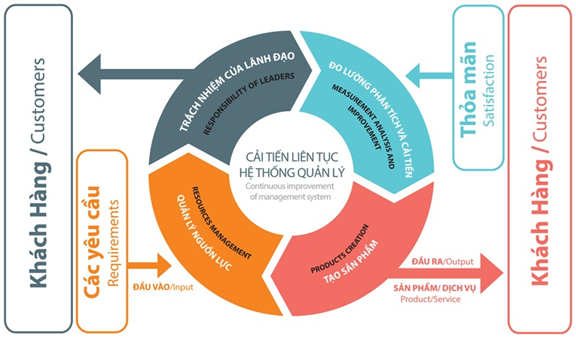
Hệ thống quản lý chất lượng ISO
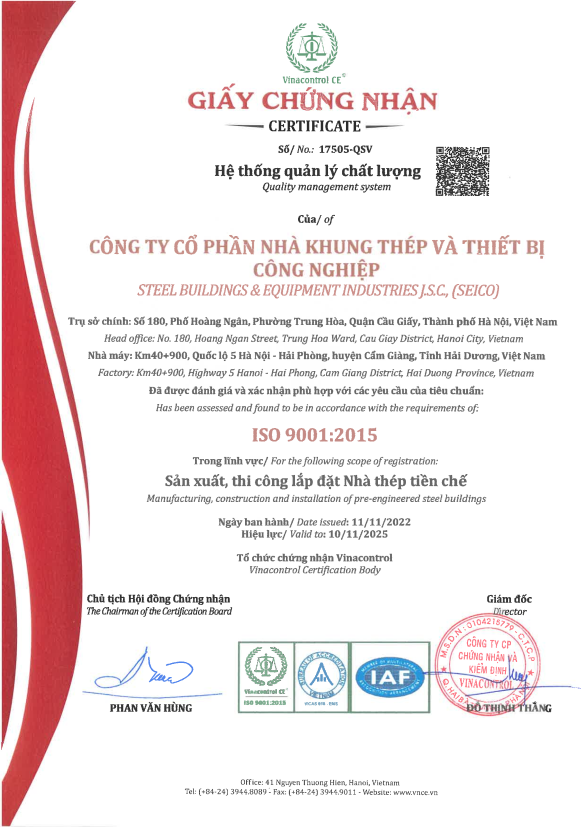
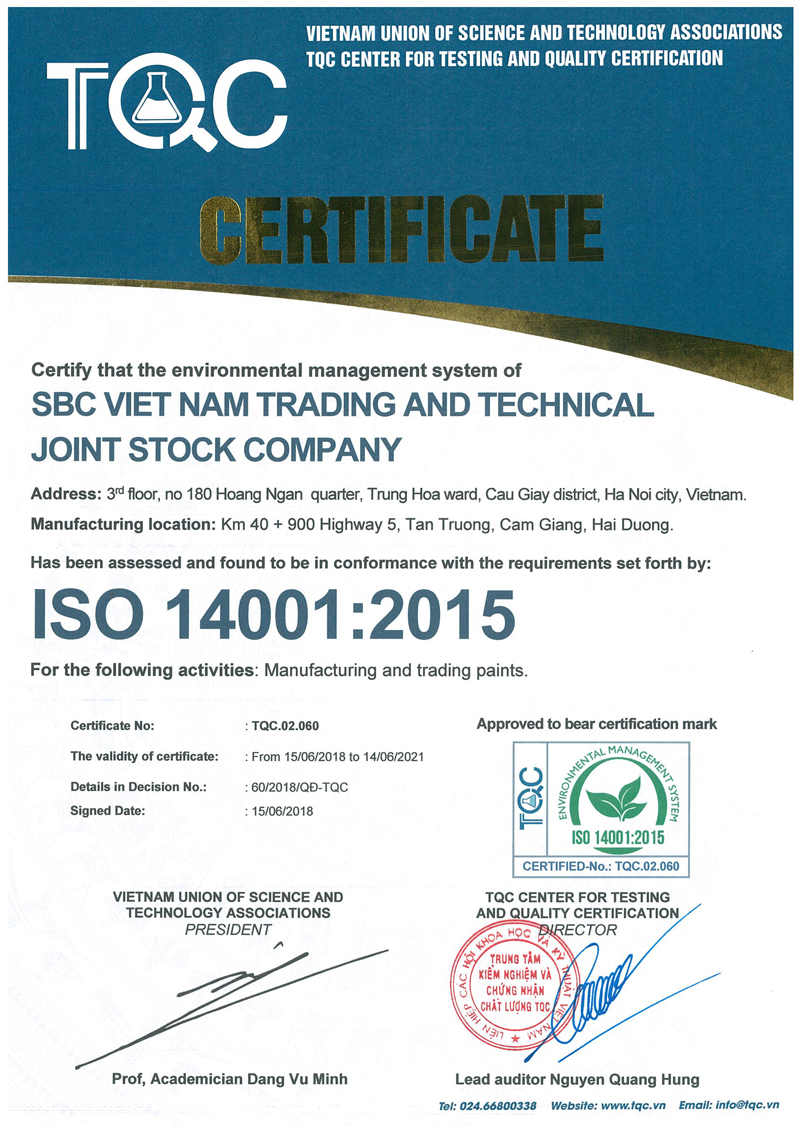
Sức khỏe
SEICO luôn nỗ lực tạo ra môi trường làm việc lành mạnh và an toàn cho CBCNV: Các CBCNV được huấn luyện định kỳ về sức khỏe và an toàn cần thiết cho công việc của họ. Đồng thời các phân xưởng sản xuất của công ty được vận hành dưới hệ thống kiểm soát kỹ thuật và hành chính chặt chẽ, chương trình bảo dưỡng thường xuyên và quy trình làm việc an toàn.
Công tác kiểm tra được tiến hành định kỳ. Các chính sách, nguyên tắc về sức khỏe và an toàn do Nhà nước ban hành được cập nhật thường xuyên để phản ánh điều kiện sức khỏe và an toàn hiện tại. Những nguyên tắc này bao gồm quản lý vật liệu nguy hiểm và giảm thương tích tại nơi làm việc
Mục tiêu của Công ty là thực hiện chế độ làm việc hợp lý, khoa học đảm bảo sức khỏe người lao động và phù hợp với quy định của pháp luật:
* Công ty thực hiện đầy đủ chính sách đối với người lao động theo quy định hiện hành của Nhà nước: Chế độ BHXH, BHYT cho 100% người lao động được hưởng chế độ, mua bảo hiểm thân thể, hàng năm tổ chức Hội nghị người lao động cho toàn thể CBCNV. Năm 2018, Công ty đã bình xét và thưởng cho đơn vị, cá nhân xuất sắc hoàn thành tốt nhiệm vụ.
* Thời giờ làm việc: 8 giờ/ngày (48 giờ/tuần);
* Nghỉ Lễ, Tết, phép: Theo quy định hiện hành của Nhà nước;
* Nghỉ ốm đau, thai sản, dưỡng sức: Theo quy định hiện hành của Nhà nước;
* Điều kiện làm việc: Công ty trang bị đầy đủ trang thiết bị và phương tiện bảo hộ để người lao động làm việc; Thực hiện đầy đủ các quy chuẩn, quy trình về an toàn vệ sinh lao động.
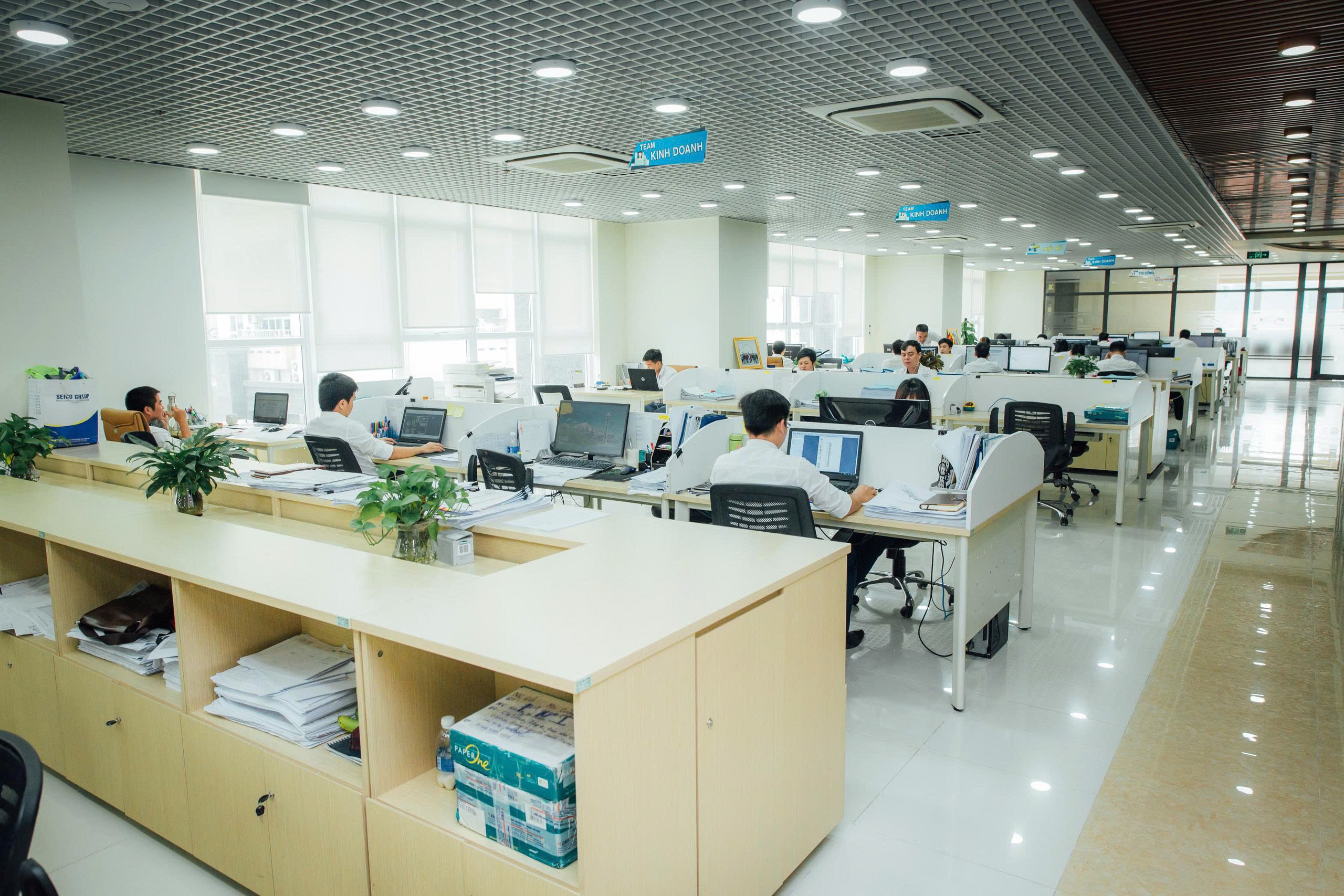
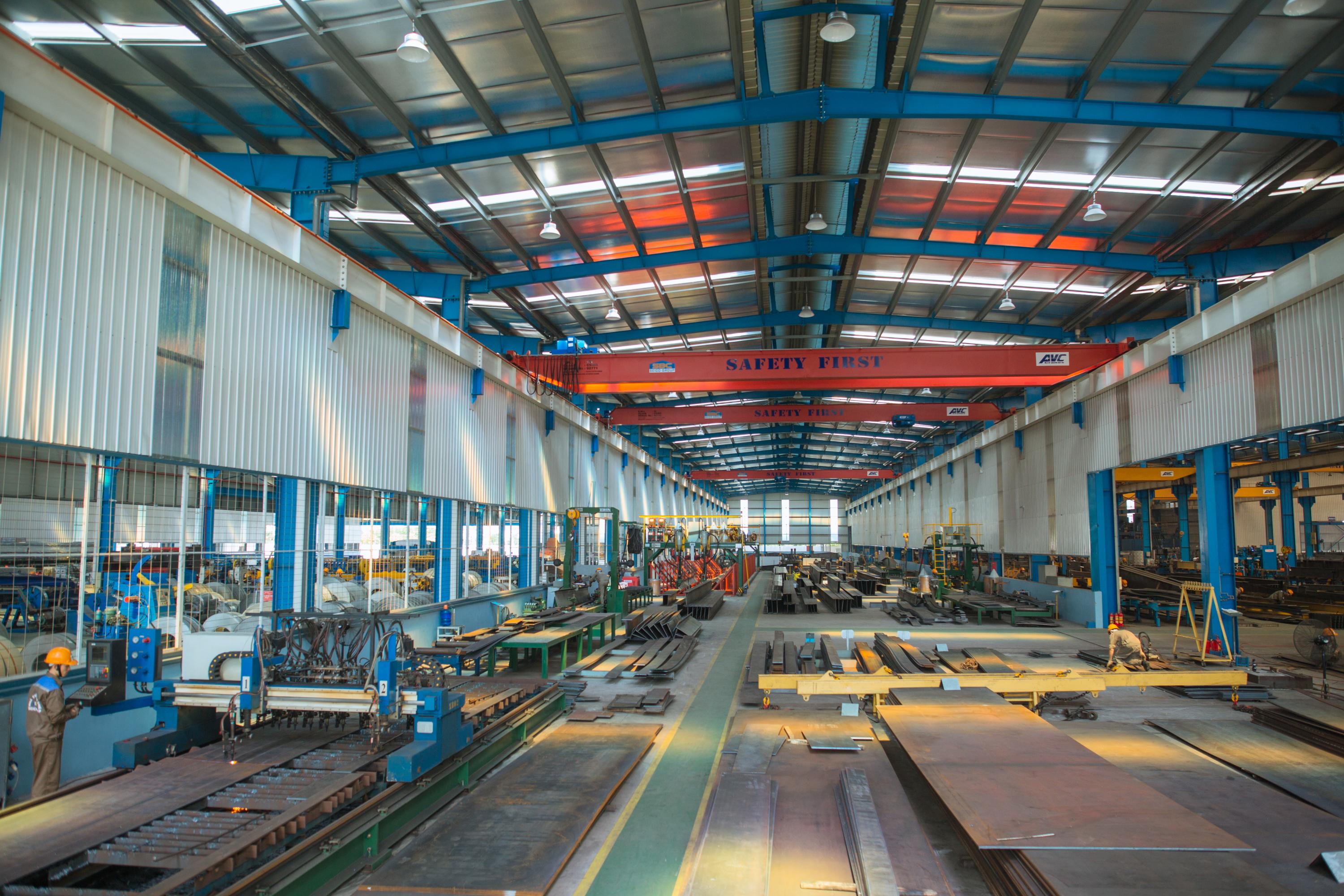
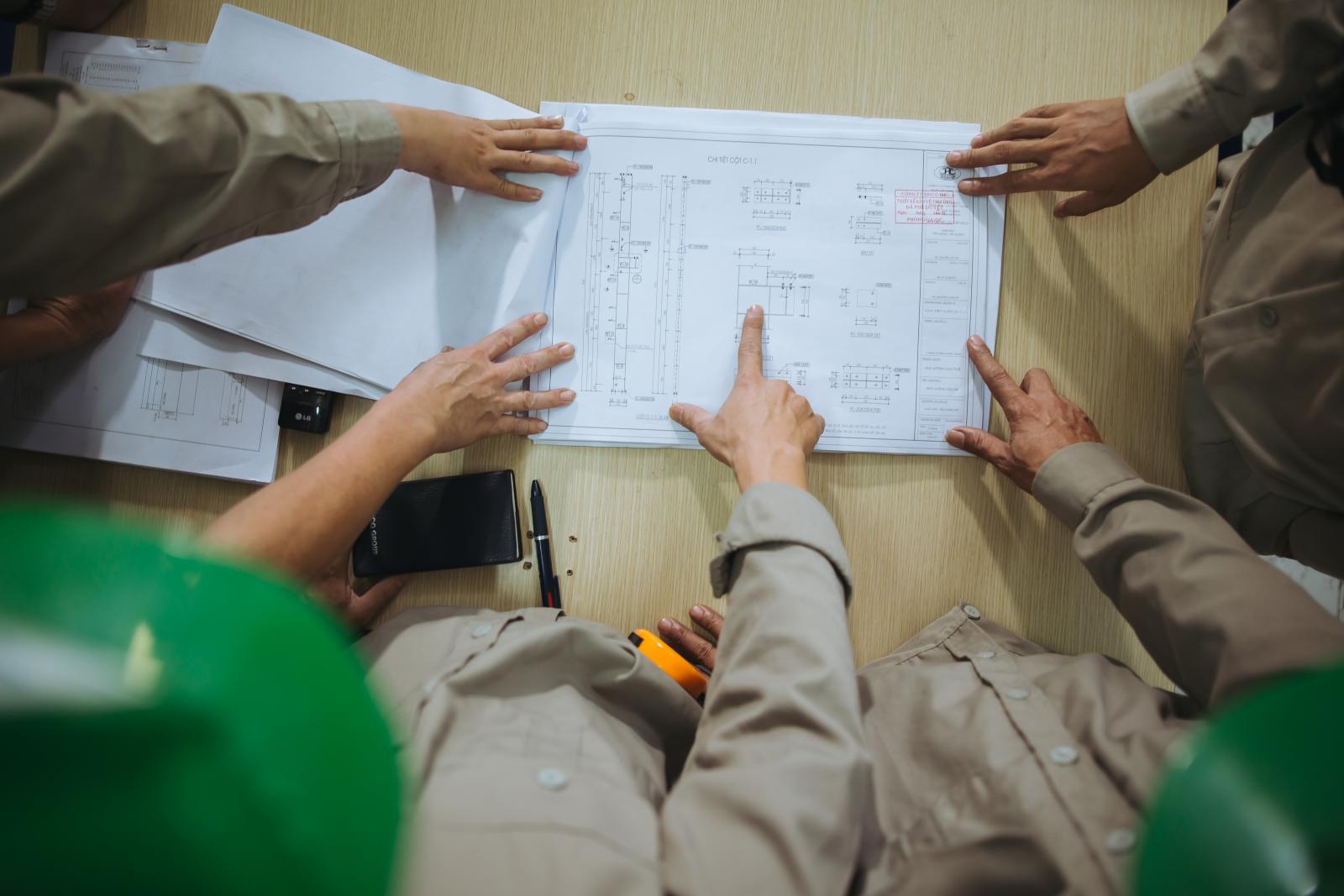
.jpg)
An toàn
Thiết lập chính sách an toàn, sức khỏe nghề nghiệp và môi trường để bảo vệ "Nguồn Lực" là lương tâm và trách nhiệm của tất cả mọi người. Trong đó trách nhiệm cao nhất thuộc về lãnh đạo cấp cao được giao nhiệm vụ đặc trách về công tác an toàn lao động.
Quản lý trực tiếp, giám sát
- Quản lý trực tiếp, giám sát có nhiệm vụ theo dõi giám sát định kỳ hàng ngày tại nơi làm việc, vị trí làm việc để đảm bảo khu vực làm việc an toàn và tránh rủi ro về an toàn và sức khỏe cho công nhân.
- Cán bộ giám sát công việc (kỹ thuật, an toàn) phải có mặt suốt thời gian làm việc.
- Cán bộ giám sát phải nắm vững phần quy trình liên quan trực tiếp đến nhiệm vụ đang giám sát.
Khi phát hiện thấy hiện tượng đe dọa tính mạng hoặc thiết bị thì có quyền đình chỉ và yêu cầu làm theo sự hướng dẫn của mình
Công nhân
- Công nhân có trách nhiệm thực hiện công việc tại nơi làm việc theo đúng các tiêu chuẩn an toàn do người sử dụng lao động đề ra và các nội quy, điều luật có liên quan
- Đối với người lao động, tạm thời tuân thủ các tiêu chuẩn tại nơi làm việc và tuân thủ theo chỉ dẫn của người làm việc nơi công trường
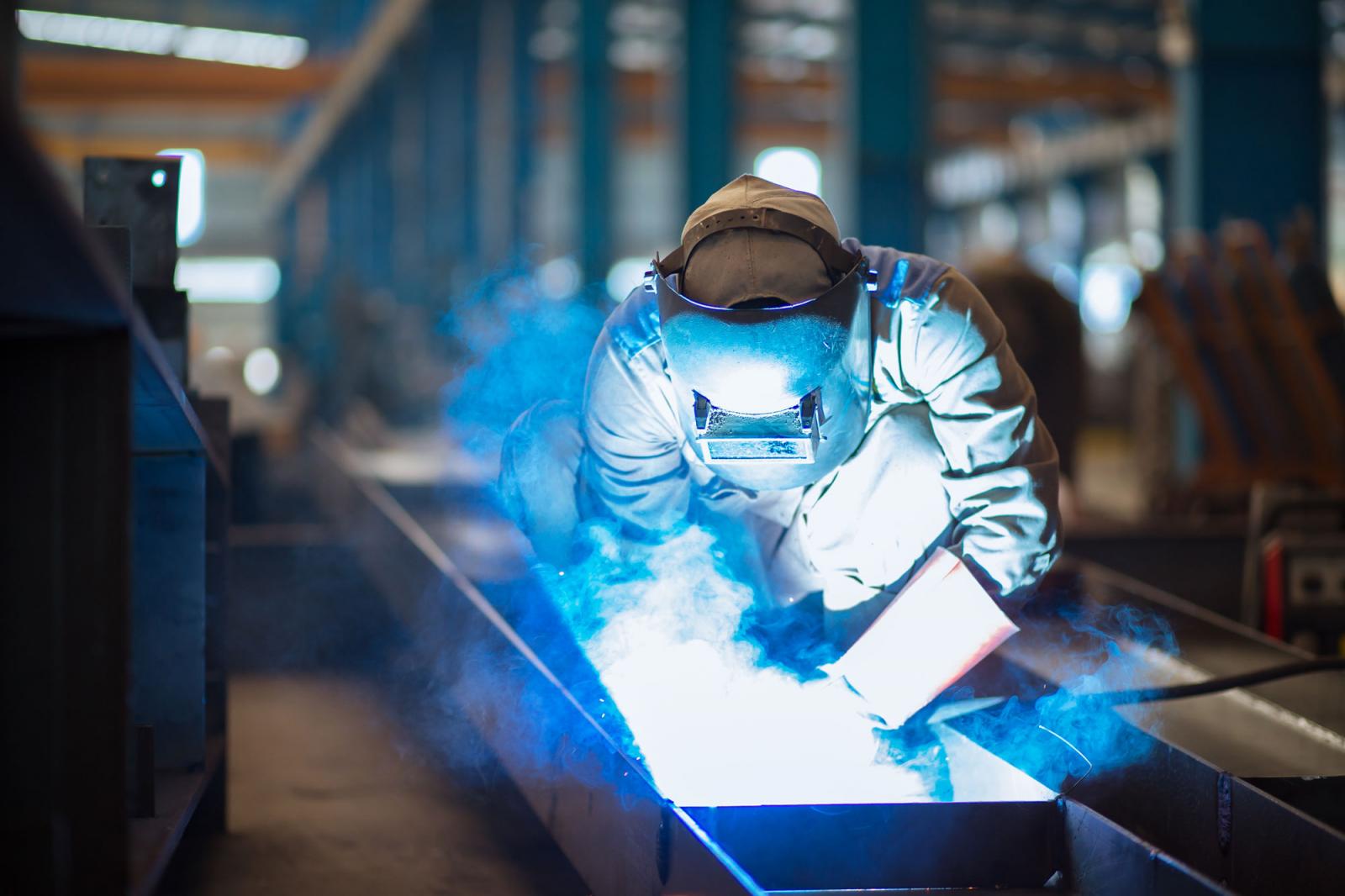
Công nhân được trang bị đầy đủ dụng cụ bảo hộ.
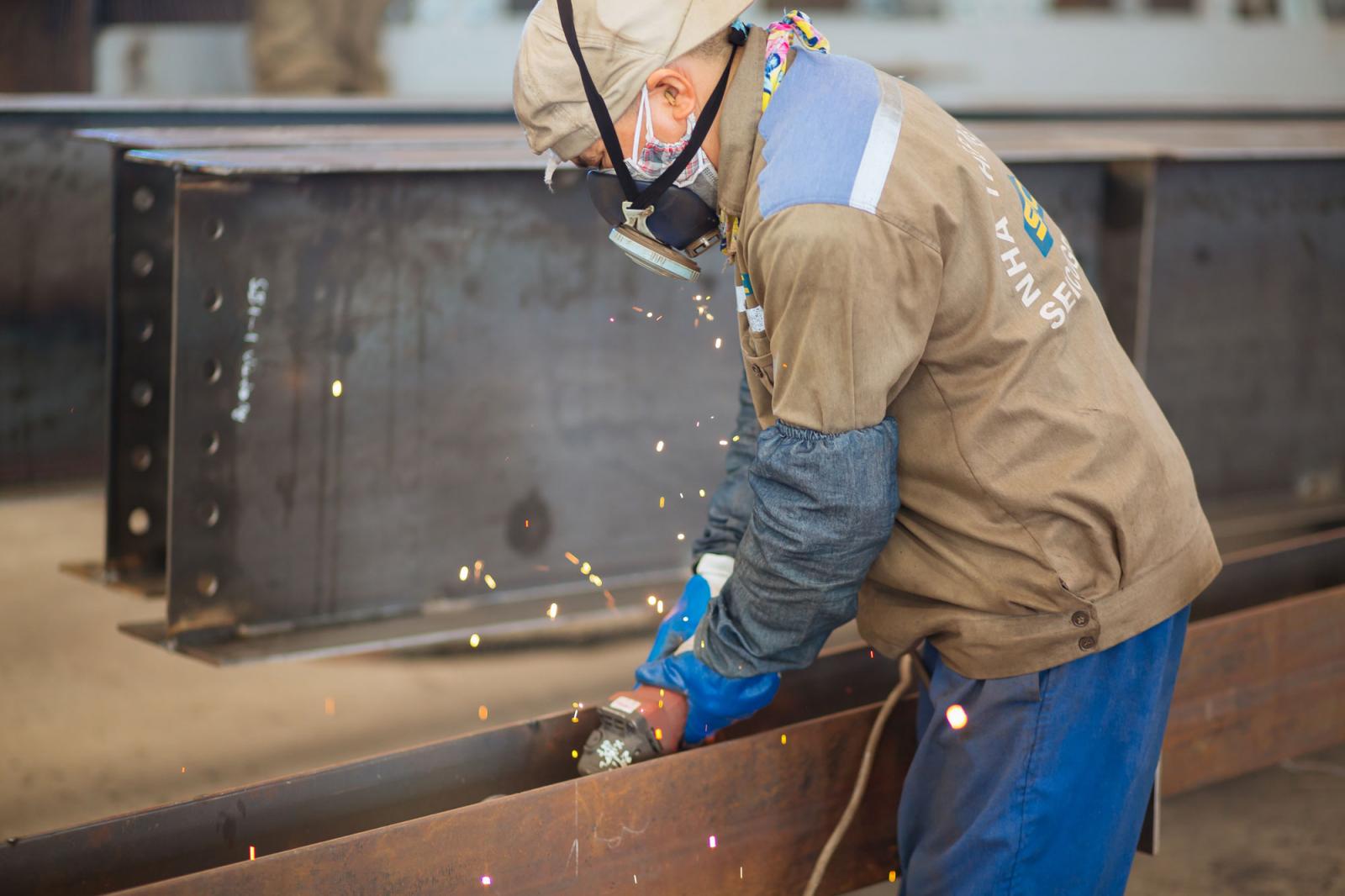
Công nhân được trang bị đầy đủ dụng cụ bảo hộ.
Môi trường
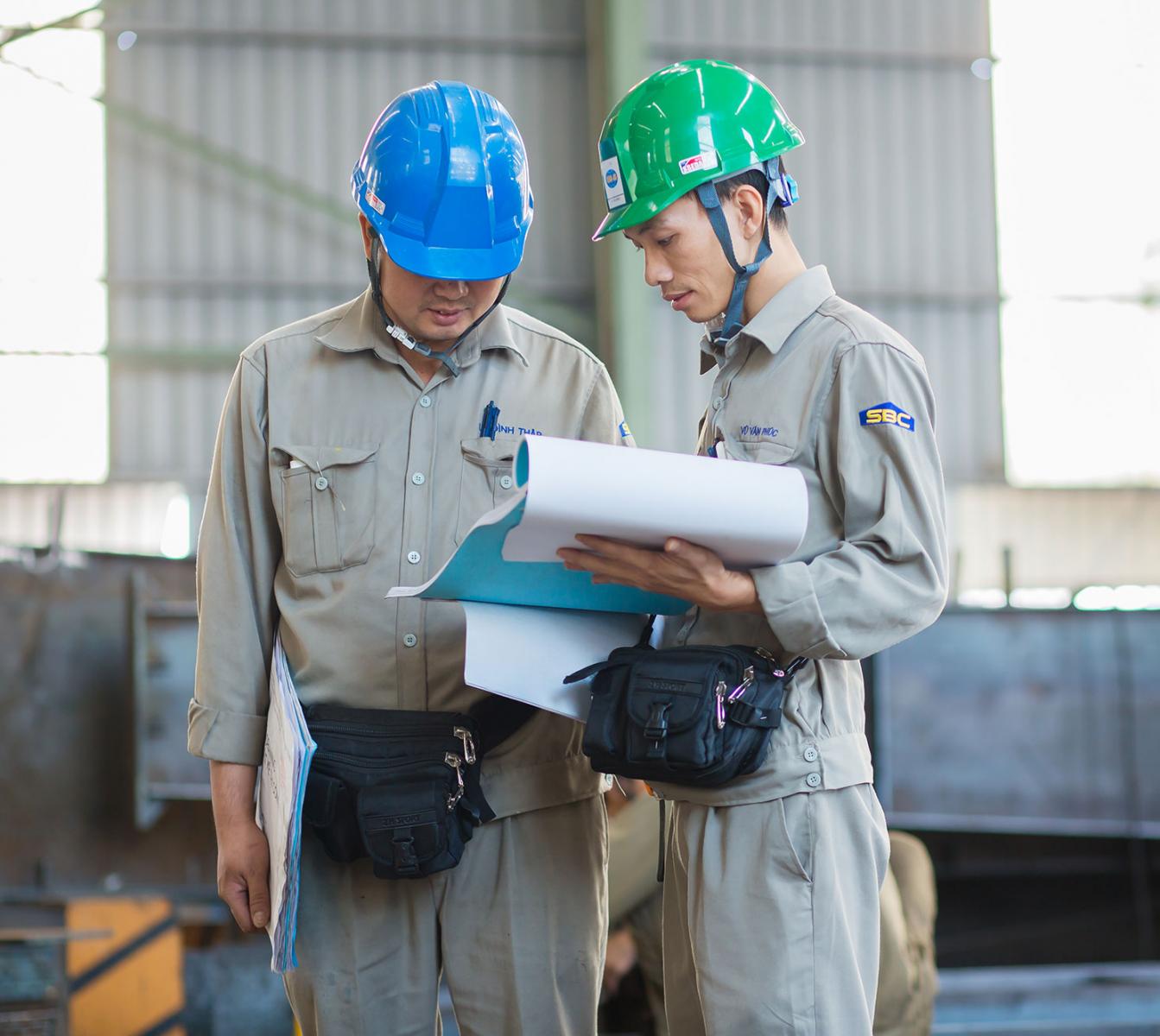
Nơi làm việc bừa bãi có thể gây ra tai nạn, không hiệu quả cao và tạo ra các nguy cơ rủi ro. Môi trường không sạch sẽ, an toàn sẽ ảnh hưởng đến sức khỏe cho mỗi cá nhân. Vì vậy, việc vệ sinh sạch sẽ nơi làm việc giúp cho mọi người thoải mái, tự tin làm việc.
- Mọi người phải có trách nhiệm bảo đảm nơi làm việc sạch sẽ (Nếu bạn làm bừa bãi thì phải dọn dẹp). Dụng cụ và thiết bị làm việc phải được đặt tại nơi chắc chắn, an toàn.
- Khi mài hàn, các mảnh kim loại hoặc đoạn nhỏ phải được đựng một cách phù hợp nhằm tránh rơi rớt.
- Khu vực làm việc phải được kiểm tra và luôn sạch sẽ, gọn gàng trước khi bắt đầu công việc.
- Tất cả các khu vực làm việc phải được kiểm tra thường xuyên, vật liệu thừa phải được di chuyển đi hoặc xếp thành đống hằng ngày.
- Tất cả sự cố tràn nhiên liệu, chất nguy hiểm hoặc hóa chất phải được hốt vào thùng, dọn sạch sẽ. Khi hút thuốc lá, tàn thuốc, rác phải được đựng vào thùng thích hợp.
.jpg)
.jpg)