
 Vietnam
  English
  Japan
Japan  Korea
Korea  China
China  Indonesia
  Thailand
Welding Quality Control – A Key Factor Determining the Reliability of Steel Structures
-
07/04/2026
In the steel structure industry, welds are considered the critical “linking element” that directly affects the strength and safety of the entire structure. No matter how accurate the design is or how high-quality the materials are, if the weld quality is not ensured, the structure will still pose potential risks during operation.
Therefore, welding quality control is a mandatory process that must be strictly implemented in accordance with technical standards, consisting of three main stages: before welding, during welding, and after welding.
1. Pre-Welding Control
Before welding begins, all technical factors and working conditions must meet the required standards:
- Inspect incoming materials to ensure they are free from rust, cracks, or deformation.
- Clean the welding surfaces, removing dirt, oil, grease, and other contaminants.
- Assemble components with correct dimensions and joint gaps according to design drawings.
- Ensure welding equipment, electrodes, filler wires, and shielding gases are in good condition and properly calibrated.
- Welders must be properly instructed and fully understand the Welding Procedure Specification (WPS).
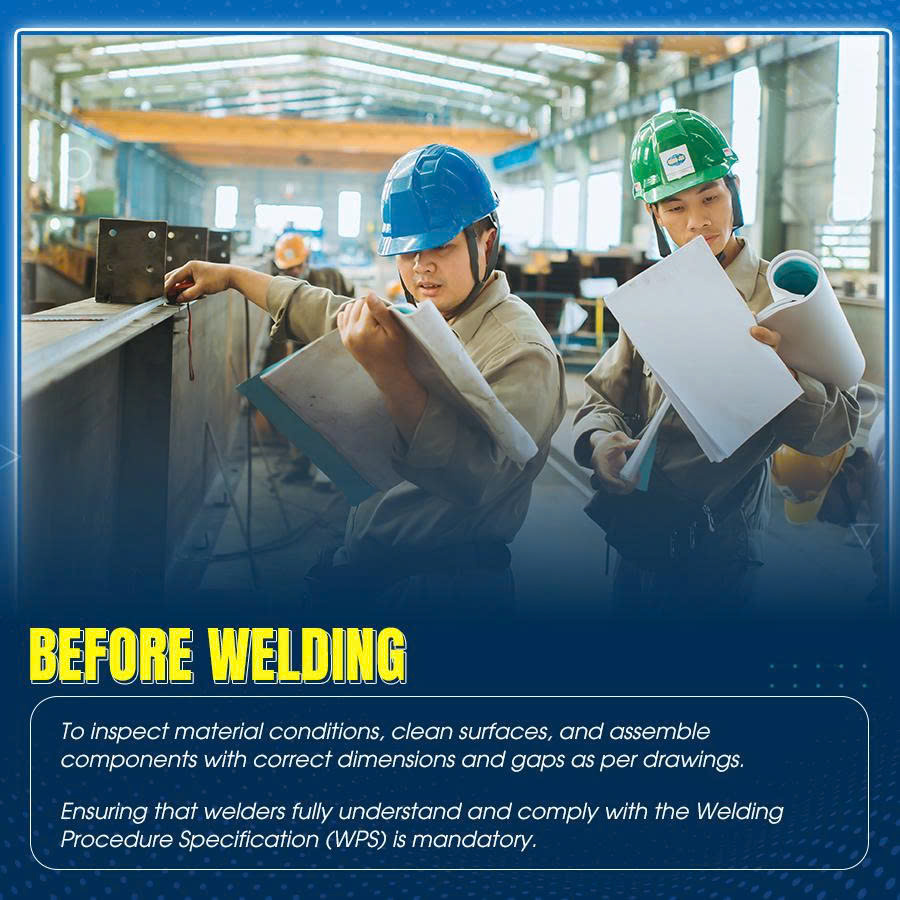
Seico welding quality control - before welding
Proper preparation helps minimize errors during the welding process.
2. In-Process Welding Control
During welding, supervision must be continuous and strictly maintained:
- Control key parameters such as current, voltage, travel speed, and heat input.
- Monitor interpass temperature to ensure compliance with standards.
- Observe continuously to detect early signs of distortion or defects.
- Any deviation from the welding procedure must be recorded and corrected promptly.
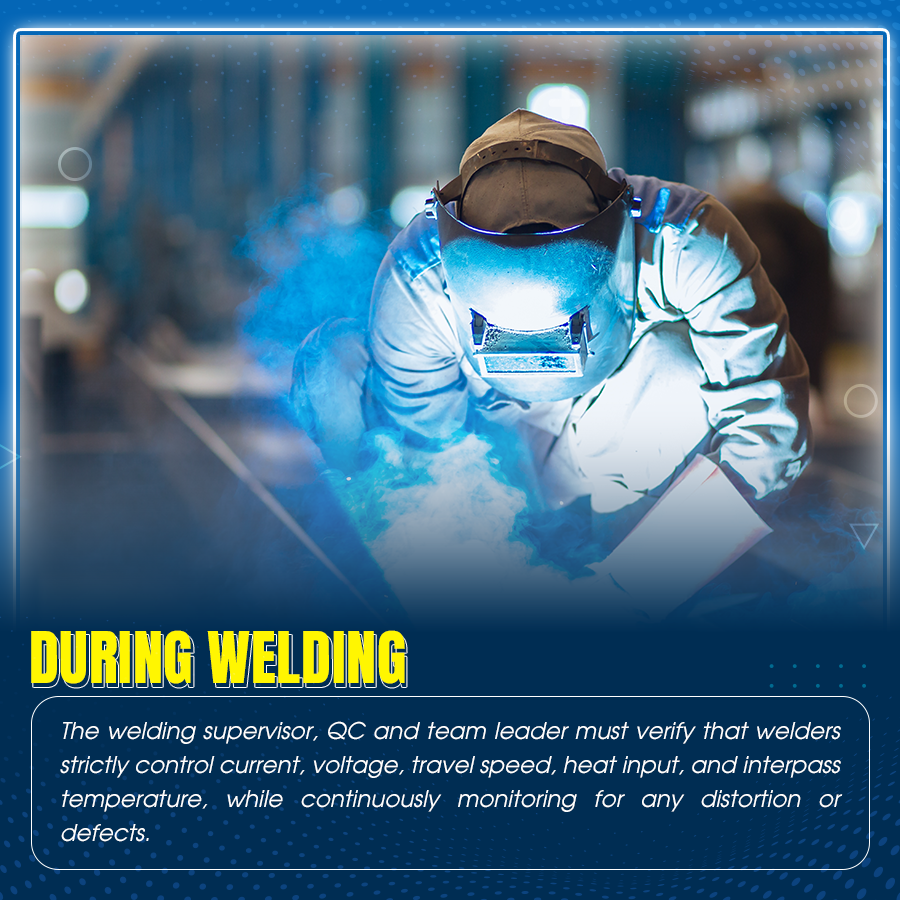
Seico welding quality control - during welding
Close coordination between supervising engineers and production supervisors plays a crucial role in maintaining consistent weld quality.
3. Post-Welding Control
After welding is completed, inspection and evaluation are required:
- Check weld shape and dimensions according to technical drawings.
- Detect surface defects through visual inspection (VT).
- Apply Non-Destructive Testing (NDT) methods such as:
- MT (Magnetic Particle Testing)
- PT (Liquid Penetrant Testing)
- UT (Ultrasonic Testing)
- RT (Radiographic Testing)
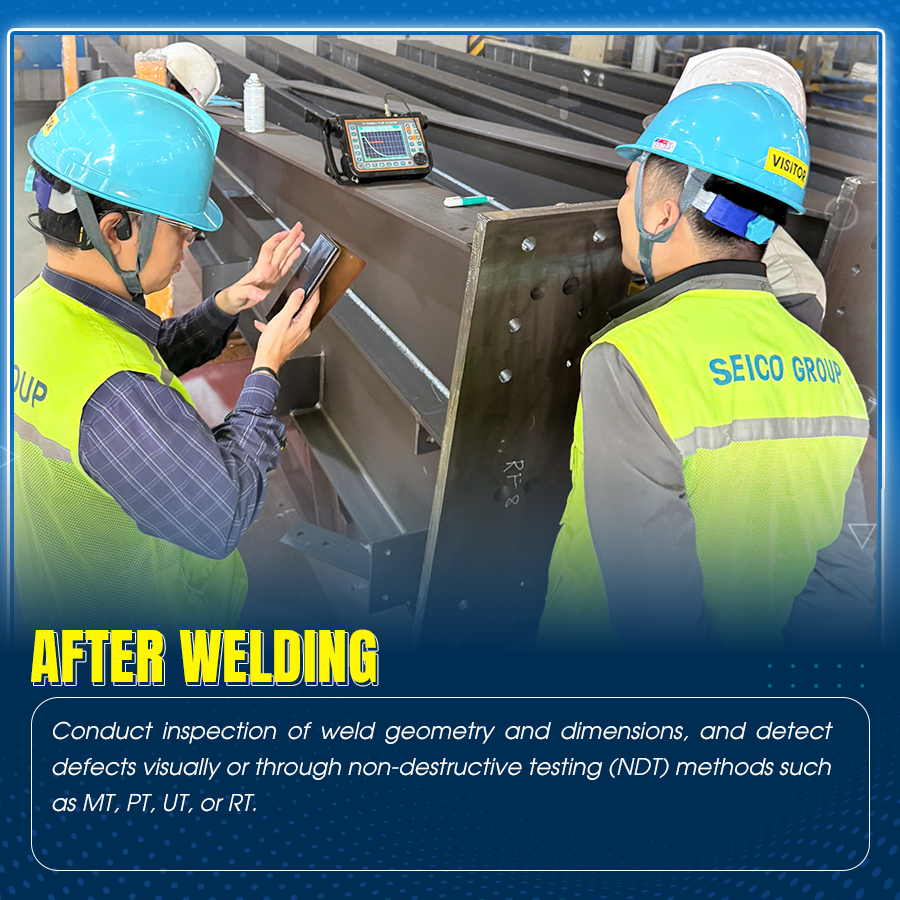
Seico welding quality control - after welding
Only structures with welds that meet the required standards are allowed to proceed to the next stage.
Welding quality control is not only a technical requirement but also a decisive factor in ensuring the safety and service life of steel structures. Strict compliance with all three stages of the process helps companies ensure product quality, minimize risks, and enhance their reputation in the market.
Seico - True Steel - Complete Trust
-------------------
SEICO STEEL
Website: http://seico.vn
Email: hnsales@seico.vn
YouTube: www.youtube.com/@SEICOJSC
LinkedIn: SEICO JSC trên LinkedIn
Tin tức liên quan
- 04
- Aug
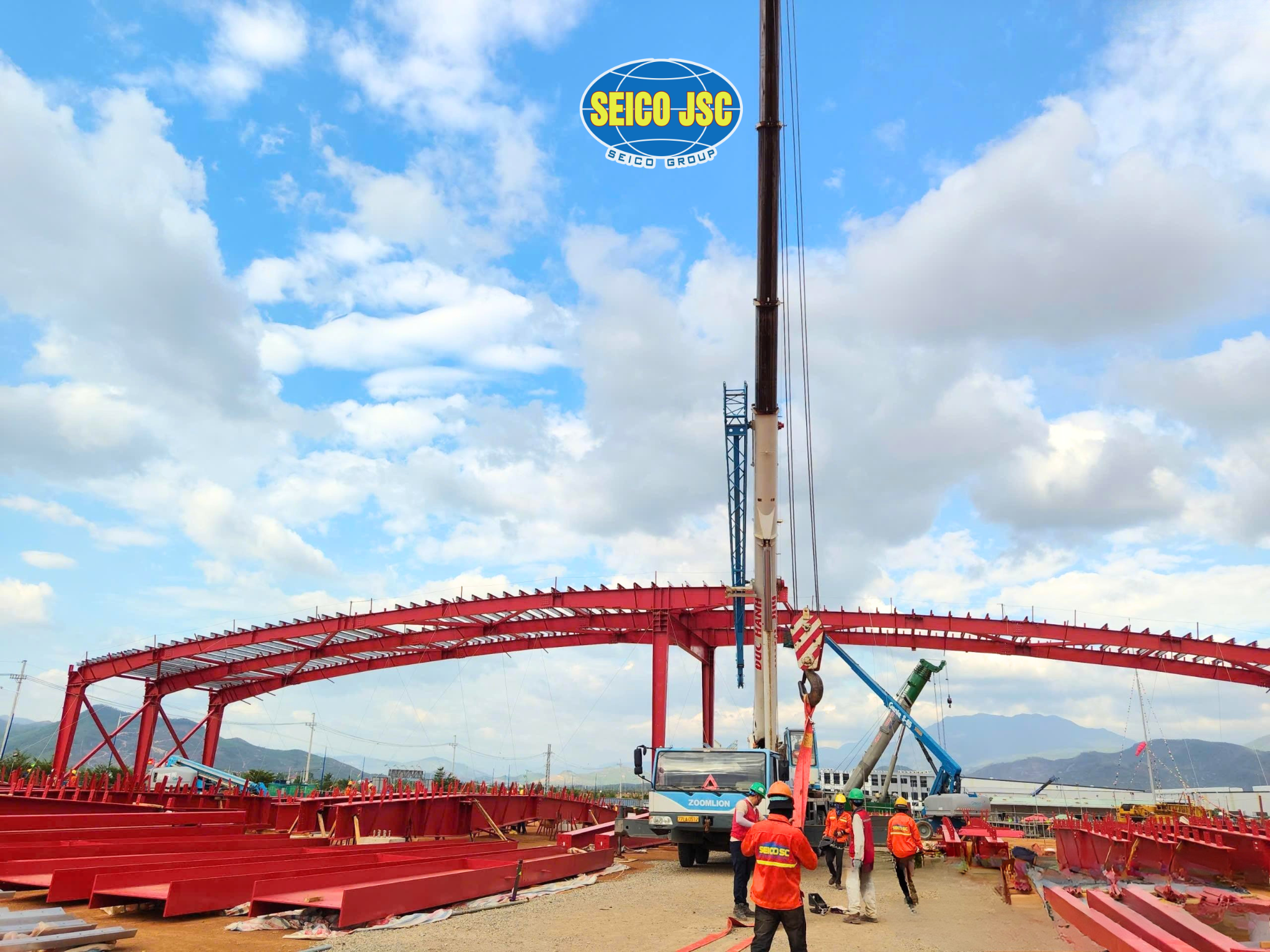
Mascot Project in Gia Lai Vietnam officially commences
- 04/08/2026
SEICO has officially commenced the structural steel and protective coating package for the Mascot Vietnam Gia Lai Factory, a large-scale foreign direct investment (FDI) project in Vietnam’s Central Highlands region.
Xem thêm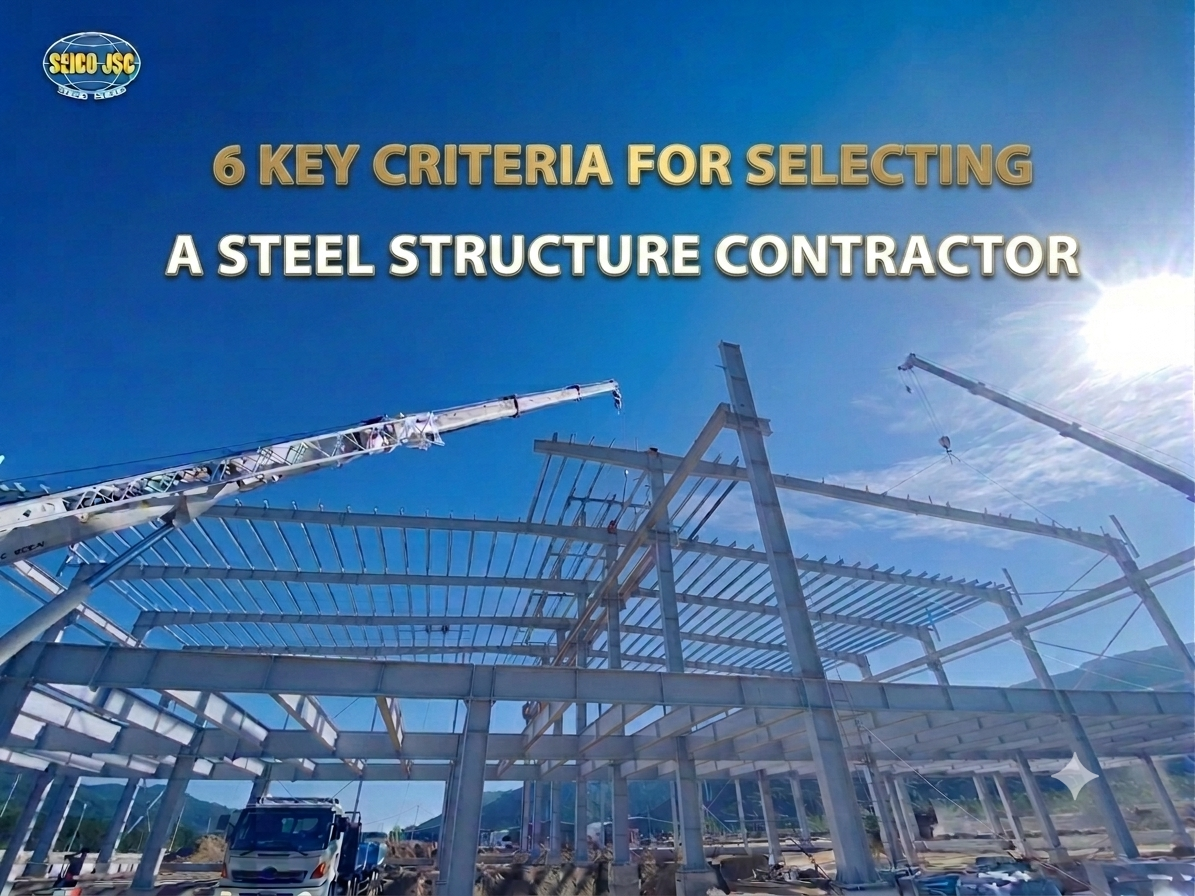
- 30
- Jul
6 Key Criteria For Selecting A Steel Structure Contractor
- 30/07/2026
In any project, the steel structure forms the foundation that determines the quality, schedule, and investment efficiency of the entire building. For this reason, the selection of a contractor must be evaluated based on execution capability, management systems, and the ability to partner throughout the full project lifecycle.
Xem thêm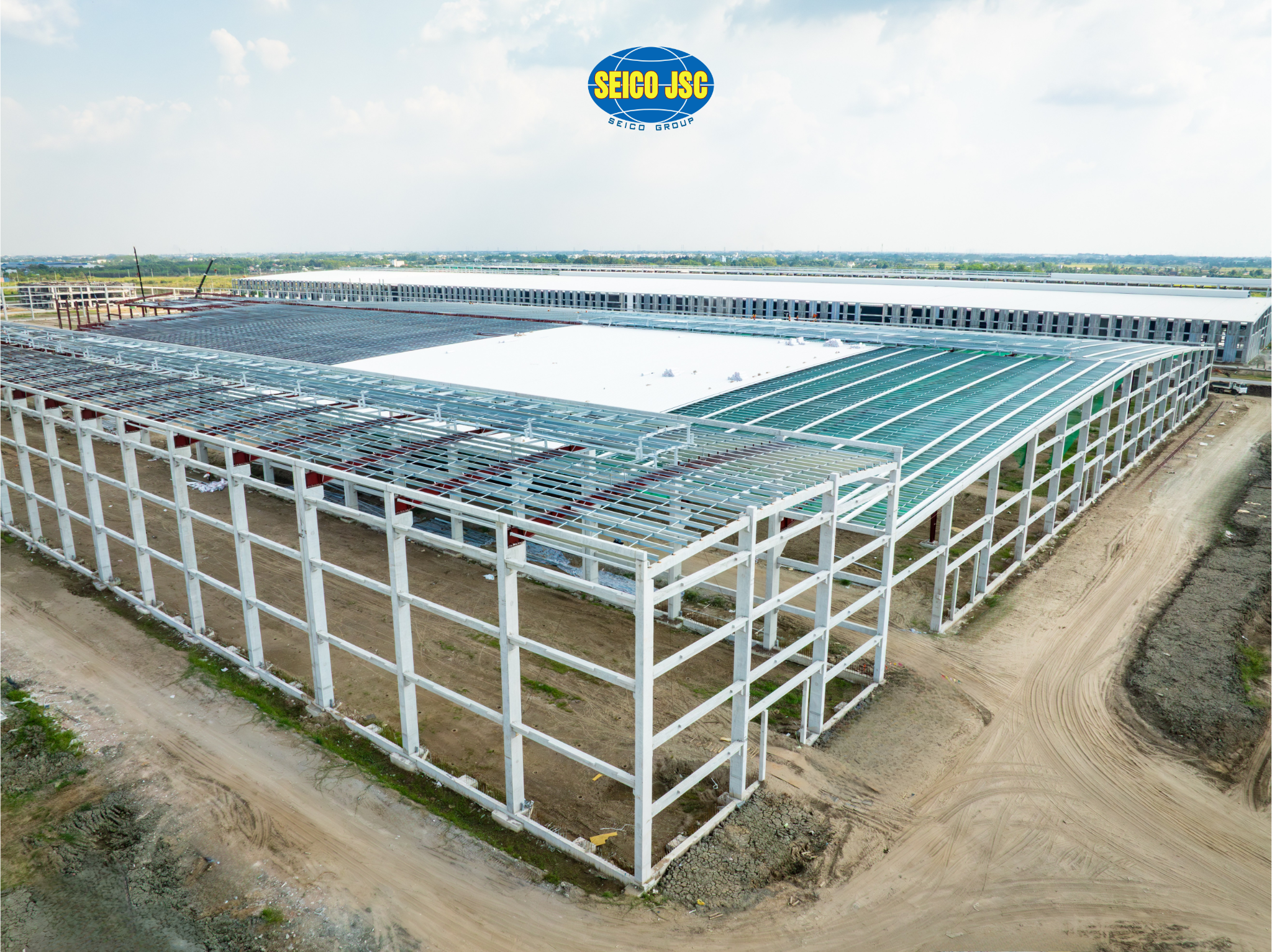
- 29
- Jul
Technical Insight: Modern Textile Manufacturing Facilities
- 29/07/2026
SEICO has participated in the development of multiple facilities within Thai Tuan Group’s integrated textile, dyeing, and garment manufacturing system. With more than 30 years of growth and industry leadership, Thai Tuan is recognized as one of Vietnam’s leading textile brands. Through these projects, SEICO has gained a deep understanding of the key requirements for textile manufacturing facilities:
Xem thêm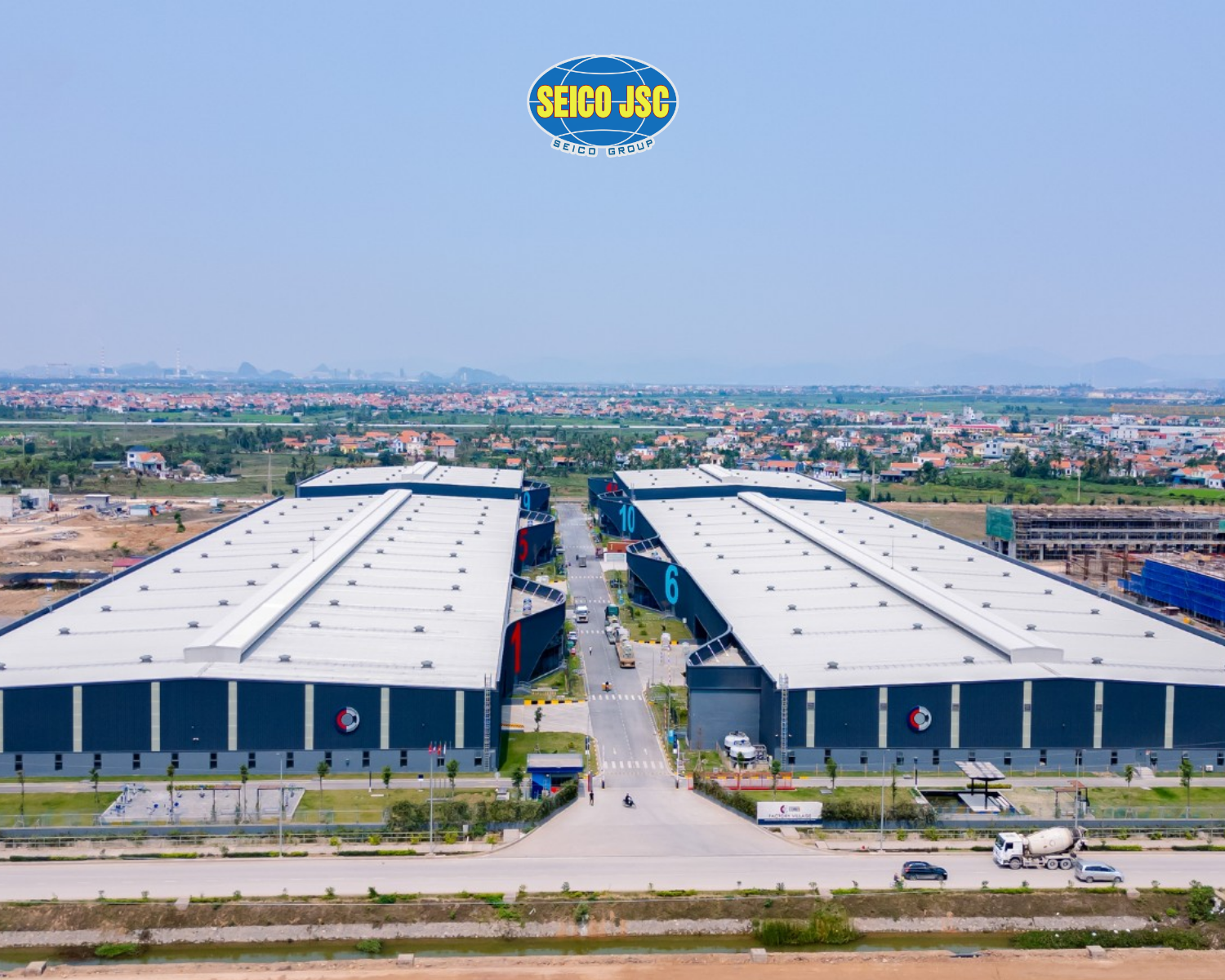
- 17
- Jul
CORE 5 Quang Ninh - When Logistics Requires More Than A Conventional Warehouse
- 17/07/2026
The CORE5 Quang Ninh project stands as a testament to SEICO’s capability in partnering with investors and developers to deliver modern logistics centers, enhancing supply chain efficiency and supporting the evolving growth demands of the market in the years ahead.
Xem thêm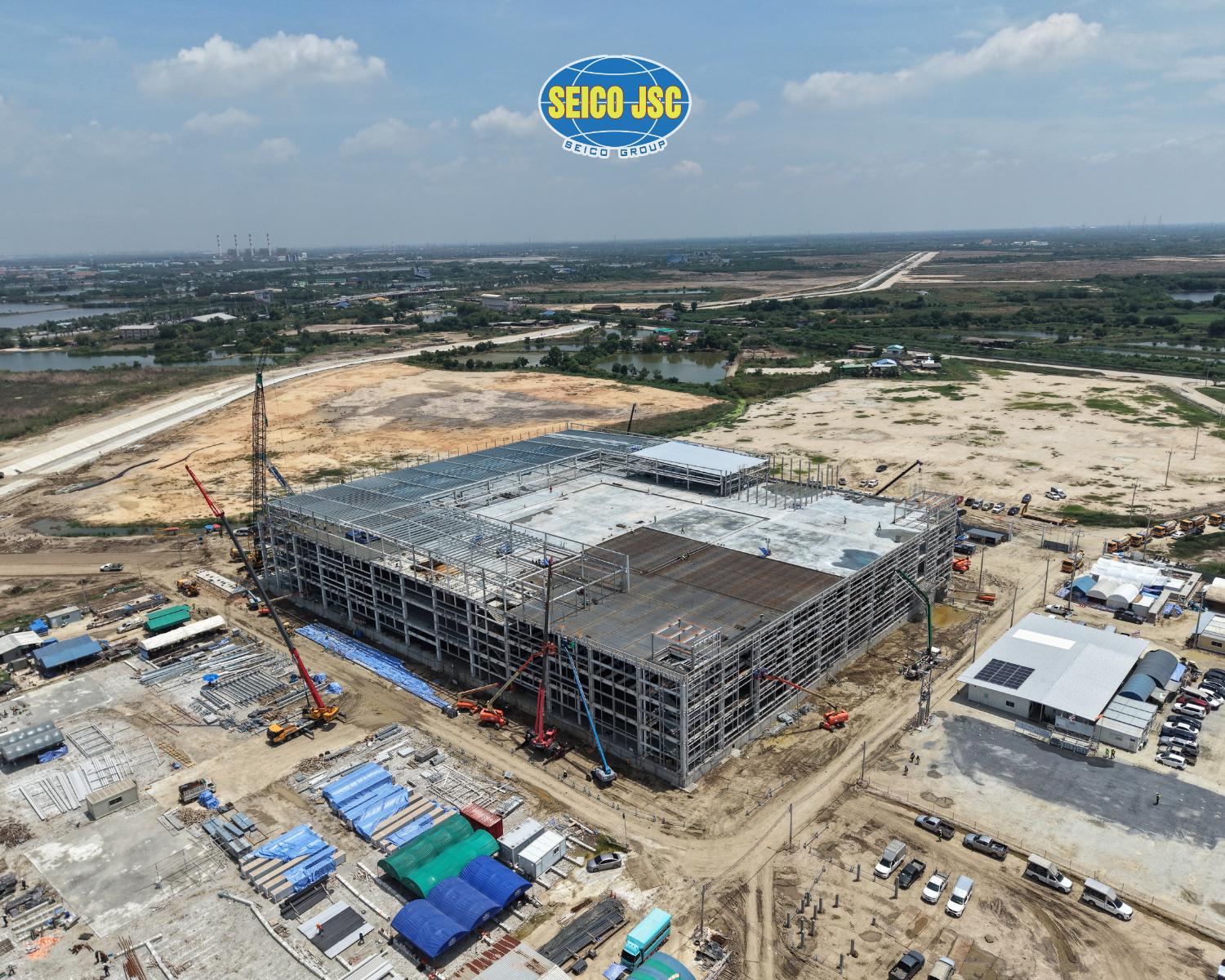
- 14
- Jul
- 14/07/2026
SEICO has successfully completed the fabrication and erection of structural steel works for a large-scale project, delivering more than 4,000 tons of structural steel and 40,000 m² of SP Deck flooring within an ambitious three-month schedule.
Xem thêm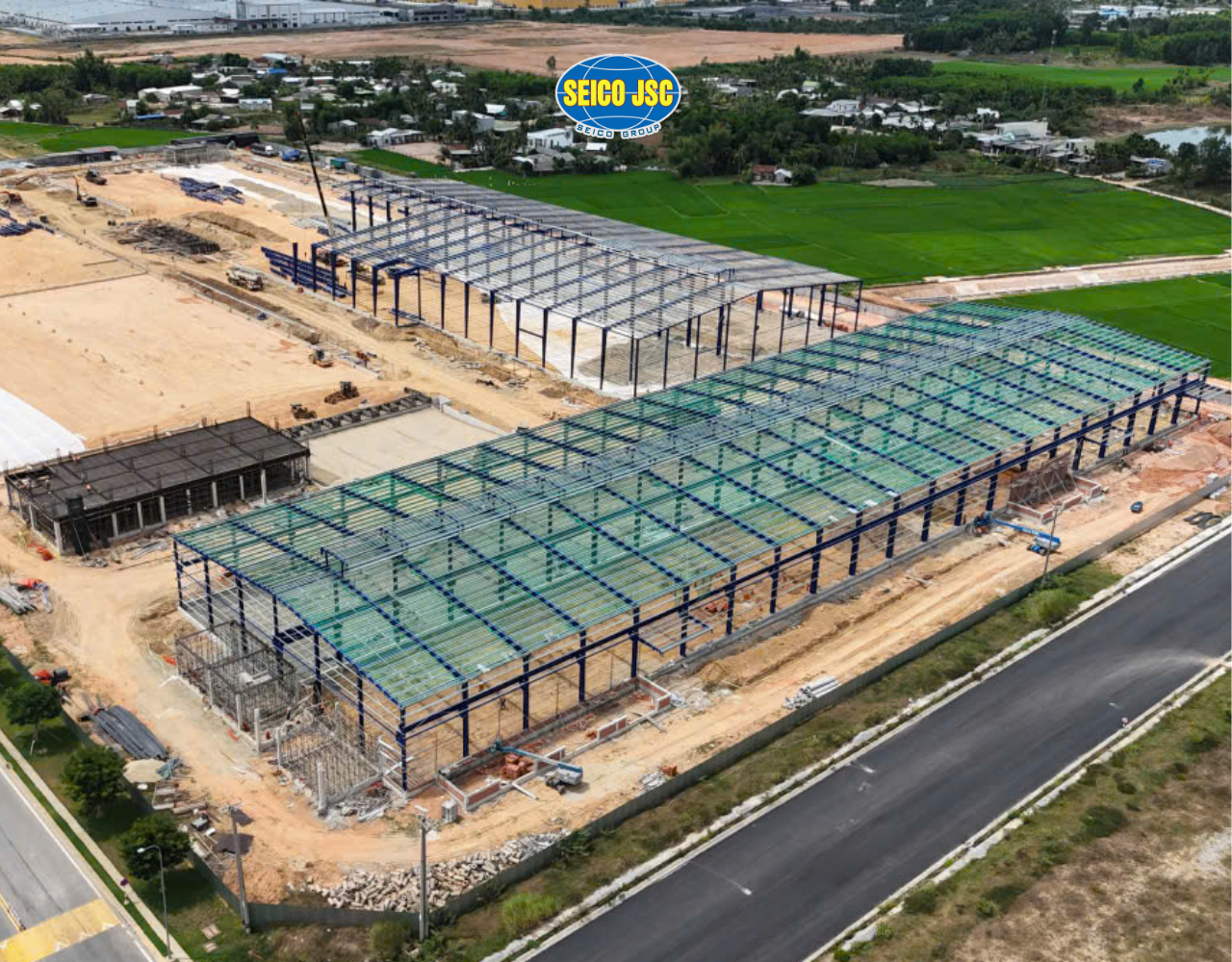
- 07
- Jul
Optimizing Factory Construction Schedules with SEICO’s Steel Structure Solutions
- 07/07/2026
SEICO is honored to be selected by Taisan Vietnam Co., Ltd. as the trusted partner to provide an integrated construction solution for the Taisan Vietnam Factory Project at VSIP Quang Ngai Industrial Park.
Xem thêm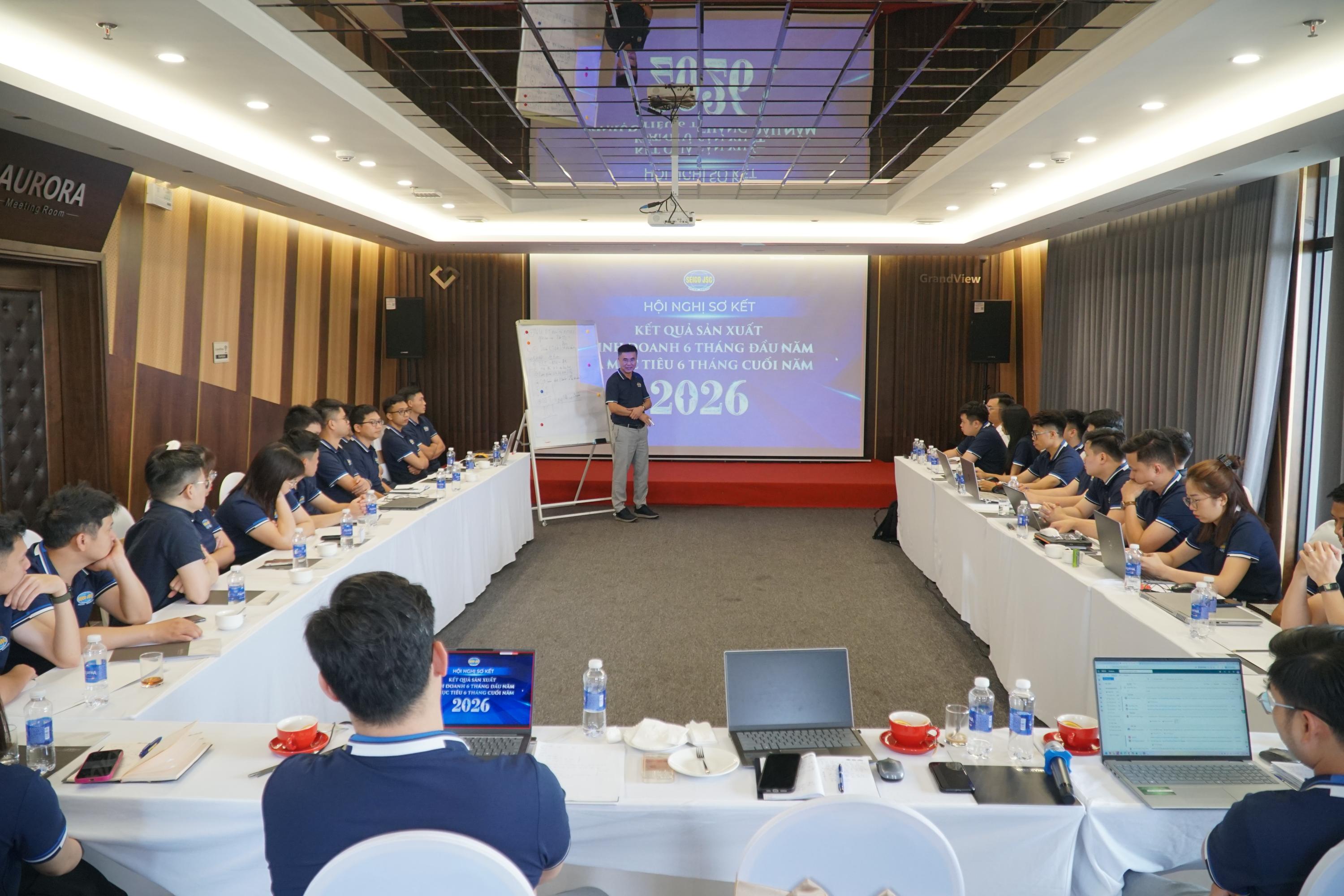
- 01
- Jul
SEICO Mid-Year Review Conference: First-half Business Results and Second-half 2026 Objectives
- 01/07/2026
On the morning of June 27, 2026, SEICO's Board of Directors, together with department managers, deputy managers, and key personnel, gathered for the Mid-Year Review Conference to assess business performance during the first six months of the year and align on objectives and action plans for the remainder of 2026.
Xem thêm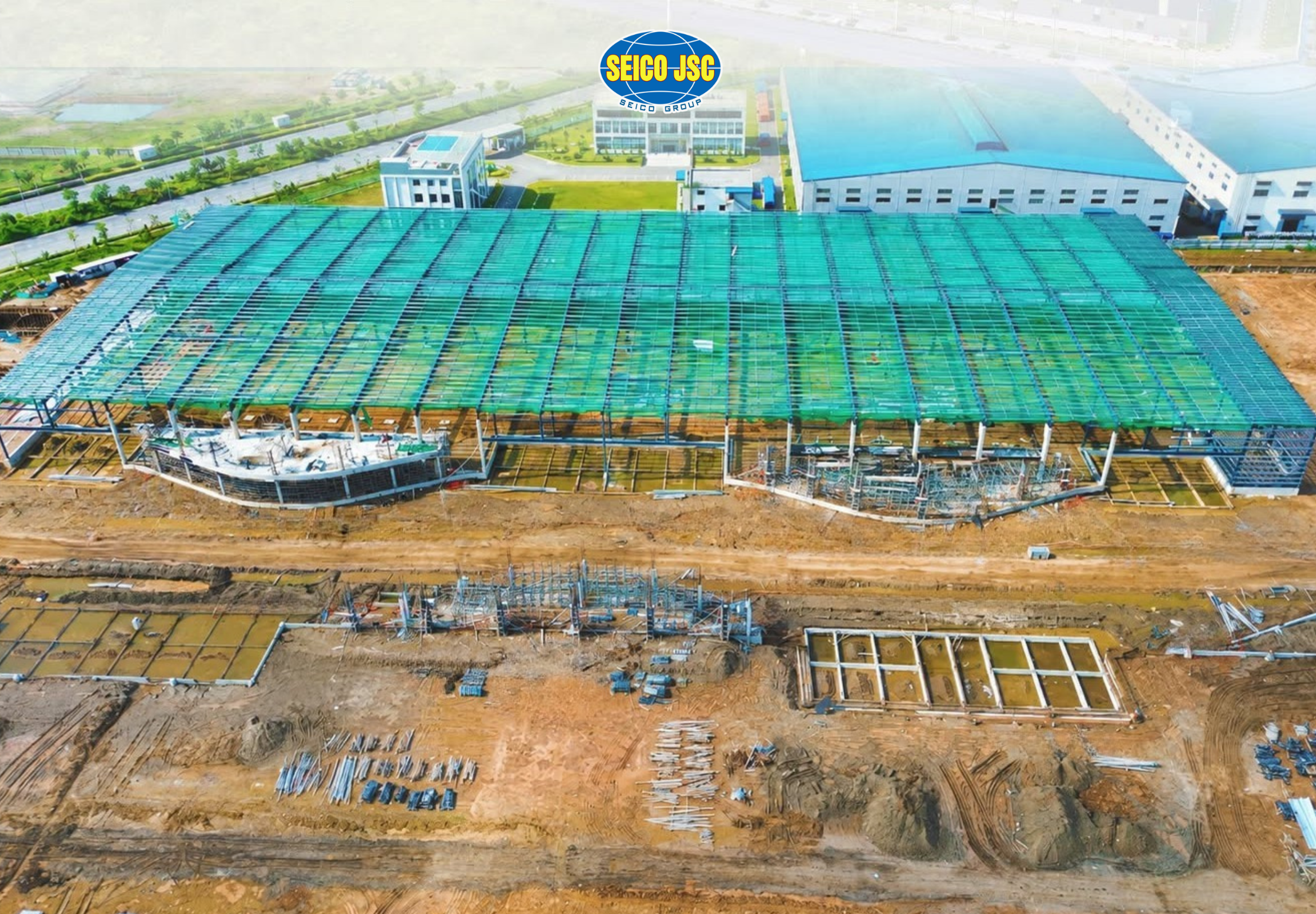
- 23
- Jun
FDI surges ahead, driving the need for more integrated industrial infrastructures solutions
- 23/06/2026
Vietnam continues to strengthen its position as one of the region’s most attractive destinations for foreign direct investment (FDI). During the first four months of 2026, total registered FDI exceeded USD 18.2 billion, representing a 32% increase compared to the same period last year.
Xem thêm